Comfort feels universal, but it’s surprisingly regional. What we call the “perfect temperature” depends on where we live, how our homes are built, and how our HVAC systems interact with the local climate. What feels cozy in Seattle might feel stifling in” Phoenix, and that difference says a lot about how humans and environments adapt together.
What Defines a Comfortable Temperature in Different Regions
“Perfect temperature” isn’t a number, it’s a feeling. It’s the moment your body doesn’t have to work to stay comfortable. For some, that might mean 68°F with a hoodie; for others, it’s 75°F and shorts.
What’s happening beneath that feeling is biology and psychology. Your body’s metabolism, hormones, muscle mass, and even emotional state all change how you perceive warmth or coolness. Stress, fatigue, or hydration can make a 72°F room feel chilly one day and cozy the next.
Most people treat temperature as a number. But it’s really a signal, your body’s way of measuring safety and control. When you feel “perfectly comfortable,” what you’re sensing isn’t the air, it’s predictability. No drafts, no surprises, no sudden shifts.
So the “perfect temperature” isn’t about thermostats, it’s the equilibrium between your body, your environment, and your mindset. Your body relaxes when it doesn’t have to react, which is why modern HVAC systems that maintain micro-stable indoor conditions often feel better than older ones set to the same number. A truly comfortable temperature comes from consistency, not just control.
How Climate Shapes Our Comfortable Room Temperature
Comfort is a learned response to your environment. Someone raised in Miami might find 70°F “cold,” while a person from Denver calls it mild. Over time, your body acclimates to local humidity, wind, and air density, all of which affect how efficiently you release or retain heat. Even seasonal shifts matter: if you live somewhere with humid summers, you’ll likely crave drier air indoors, while desert dwellers feel best with more humidity inside. Comfort, in short, evolves with your weather patterns, it’s regional DNA for your senses.
Weather doesn’t just shape comfort, it shapes expectation. Someone from Arizona doesn’t just tolerate heat; their brain recalibrates what “normal” feels like. That’s why HVAC design should reflect adaptation, not imitation. A home in Michigan shouldn’t try to feel like Miami, it should embrace its climate’s natural rhythm and help residents feel aligned with it. The best comfort systems work with local weather, not against it, that’s the foundation of a truly comfortable room temperature.
Building America Climate Zones and Weather-Responsive Architecture
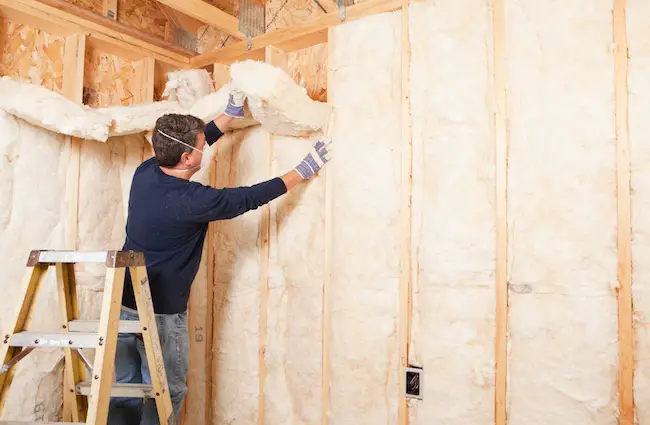
Your home’s structure sets the stage for comfort long before your HVAC turns on. In the South, light-colored, ventilated homes reflect heat; in the North, heavy brick or stone walls trap warmth. Materials “breathe” differently, wood absorbs and releases moisture, while concrete holds thermal energy like a sponge.
Insulation, window placement, and ceiling height all determine how stable indoor temperatures feel. That’s why a century-old farmhouse and a new smart home in the same zip code can feel worlds apart, even at identical thermostat settings. Every home is a thermal personality: brick homes “remember” warmth, coastal homes “breathe” with humidity, and modern sealed buildings trap air like a bubble, great for energy savings, not always for comfort.
The real game-changer now is thermal responsiveness, how quickly your home reacts to outdoor change. Materials like cross-laminated timber or phase-change drywall don’t just insulate; they adapt. “Comfort” is moving from mechanical (HVAC-only) to architectural (home as an ecosystem). Understanding Building America Climate Zones helps builders and homeowners design for comfort that’s region-specific and sustainable, creating spaces that hold a stable, comfortable room temperature year-round.
How Culture Shapes Our Sense of a Comfortable Temperature
Culture defines comfort as much as climate does. In Japan, layering up and using personal heaters is normal; in Scandinavia, people prize cool indoor air paired with warm textiles. Americans often prefer a single uniform temperature, an expectation shaped by central HVAC systems and a sense of control.
Your routines also play a role: if you’re active, you’ll tolerate cooler air. If you work from home, you’ll crave stability. So what’s “perfect” isn’t just physical, it’s cultural conditioning meeting personal rhythm. Comfort is cultural shorthand: it’s about how we live, not just how we feel.
The question isn’t just “What temperature do people like?” but “What rituals make them feel at ease?” HVAC comfort marketing that understands lifestyle cues, not just thermal data, will always connect more deeply. Cultural patterns are part of what the adaptive thermal comfort model tries to capture, showing how people adapt to climate and lifestyle in pursuit of a comfortable temperature.
Humidity’s Role in Maintaining a Comfortable Room Temperature
Humidity determines how your body cools itself. In humid air, sweat can’t evaporate effectively, so you feel sticky and overheated. In dry air, evaporation happens too fast, your skin feels tight and your throat scratchy, even at moderate temperatures. That’s why a 75°F room at 60% humidity feels completely different from one at 30%.
Humidity is the hidden sculptor of how air feels against skin and lungs, and it affects more than comfort. It shapes acoustics, scent, and even how furniture ages. Too dry, and sound gets sharp and air feels thin; too humid, and everything feels sluggish and muffled.
The best comfort zone is balance: enough moisture for skin and breathing comfort, but low enough for sweat to do its job. When you balance humidity, you’re tuning a space’s mood, not just its temperature. That’s why maintaining ideal humidity is essential to achieving a comfortable room temperature and a balanced indoor environment that supports the adaptive thermal comfort model.
The Adaptive Thermal Comfort Model and Regional HVAC Design
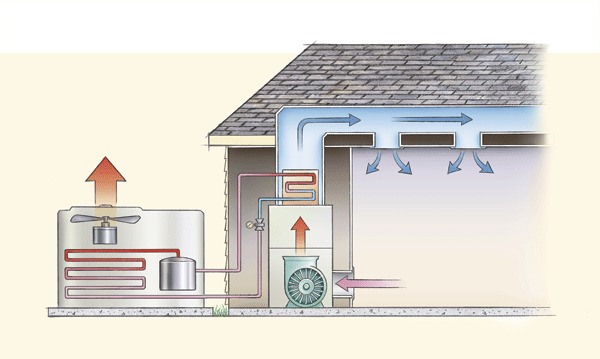
Today’s systems are smarter than ever, they don’t just chase temperature, they manage comfort profiles. Variable-speed compressors, smart thermostats, and zoned systems learn your local weather patterns and daily routines. In dry climates, they add humidity; in muggy ones, they prioritize dehumidification. Some advanced systems even track outdoor conditions and adjust preemptively, syncing indoor air quality, temperature, and moisture to keep you comfortable without you touching a button.
The new wave of HVAC isn’t about hitting targets, it’s about anticipating preferences. Smart systems analyze how you adjust settings over time, link that data to weather patterns, and automatically predict your ideal conditions, much like Spotify curates playlists. The next leap? Systems that sync with wearable tech, adjusting air quality, light, and scent around your biometric comfort zone.
The adaptive thermal comfort model is shaping how these systems evolve, recognizing that comfort depends on climate, behavior, and expectation. By aligning HVAC design with Building America Climate Zones, engineers can deliver consistently comfortable temperatures tuned to local realities instead of generic averages.
Climate Change and the Evolving Adaptive Thermal Comfort Model
As heat waves, wildfires, and polar cold snaps become more common, people’s “normal” comfort ranges are widening. Modern homes with better insulation and sealed envelopes trap air more efficiently, which means ventilation and air quality now play a bigger role in perceived comfort than they used to.
Comfort is no longer just about staying warm or cool, it’s about breathing clean, balanced air that supports health and focus. As climate anxiety rises and homes get more airtight, people are redefining comfort as health and control. They don’t just want a cozy room, they want purified air, balanced humidity, and noise-free operation.
The adaptive thermal comfort model continues to evolve in response to climate change, emphasizing flexibility, regional awareness, and the psychological side of thermal comfort. HVAC systems built with Building America Climate Zones in mind can create not only efficient environments but also truly comfortable room temperatures that adapt to our changing world.
Why There’s No Single Comfortable Temperature for Everyone
A universal ideal sounds nice, but it ignores what makes humans, and homes, unique. Climate, architecture, habits, and biology all rewrite the comfort equation. Even the widely cited “68-72°F” range was designed for office workers in business attire from the 1960s.
Comfort is personal, and it’s becoming more so. As smart homes evolve, we’re moving away from one-size-fits-all toward personalized climates, spaces that adjust to you instead of the other way around. With AI-driven climate control, your thermostat may soon know you better than your weather app does.
The universal ideal won’t be one number, it’ll be one principle: comfort is customized. Whether guided by Building America Climate Zones or enhanced through the adaptive thermal comfort model, the goal remains the same, achieving a comfortable temperature that feels uniquely yours.