
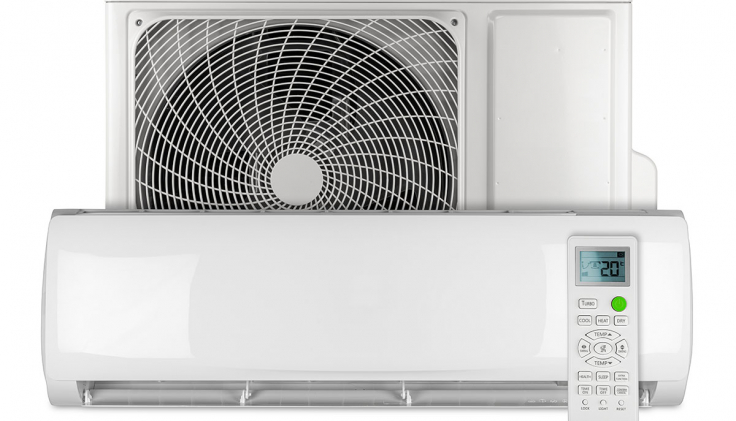
Top Reasons to Choose a Ductless AC System in 2025
A ductless mini split AC system (also called a ductless ac unit, ductless ac system, or ductless heat pump) consists of two main parts: an outdoor compressor/condenser and one or more indoor air-handling units connected by refrigerant and drain lines. The indoor unit blows heated or cooled air directly into the zone, with no ductwork involved. Because it uses inverter-driven compressors and variable-speed operation, it adjusts output to match the load instead of cycling on and off, improving comfort and energy use.
Many homeowners are making the switch because ductless ac systems eliminate duct losses that typically waste 15–30% of conditioned air through leaks or poor insulation. They also offer zoned comfort and control, allowing each room or zone to be set independently rather than relying on one thermostat for the entire house. For homes without existing ductwork, ductless ac installation is simpler and less invasive — only a small wall opening is needed for lines and wiring. Modern mini split ac systems can both heat and cool, making them a complete HVAC replacement in mild or moderate climates. They’re quiet, sleek, and easily scalable as needs change, so additional rooms can be added later without major renovation.
In short, homeowners often find that ductless ac systems reduce utility bills, eliminate hot or cold spots, and simplify installation compared to traditional central systems. More importantly, they change how people experience comfort. Traditional central AC treats a home like one big box, while mini split ac systems treat it like a collection of different zones — letting you cool or heat only the spaces you use. This precision ends the “thermostat wars” and cuts down on wasted energy from ducts hidden in attics or crawl spaces. With cold-climate heat pump technology, many homeowners are now replacing both their AC and gas furnace with one efficient, all-electric ductless ac unit — often with available rebates. It’s also a cleaner choice during remodels, since running a refrigerant line through a wall is far easier than installing new ducts.
The only real downside is that ductless ac systems work best in homes that can be logically zoned. Large open-plan spaces may still be better served by a single high-capacity central unit.
How to Pick the Right Ductless AC Unit
Efficiency determines how much energy the ductless ac unit will use and how quickly your investment pays off. Look for actual operating efficiency at partial load, not just nameplate numbers. For 2025, SEER2 of 20 or higher and HSPF2 around 9.5 are solid targets, though higher ratings face diminishing returns.
Correct capacity is just as important. Oversizing leads to short-cycling, humidity issues, and wasted energy; undersizing forces the system to run constantly. Use a proper load calculation such as Manual J, accounting for sun exposure, insulation, and occupancy. Many suppliers still under-size cooling loads, so push for a full audit before selecting equipment.
Noise levels directly affect comfort since indoor units operate in living spaces. Look for indoor sound around 24 dB in quiet mode and confirm outdoor noise levels, especially for nighttime operation. Premium systems often reach the low-20s, while mid-tier models sit in the 30s.
Warranty coverage is often overlooked but critical. Even the best mini split ac systems become a problem if parts aren’t available or the warranty has hidden exclusions. Confirm whether professional installation is required, compare compressor vs. parts coverage, and check transferability when selling a home. Ten years on compressors and at least five years on parts are common benchmarks among higher-end brands.
If the unit will serve as a primary heat source, its cold-climate performance matters. Review performance curves showing how much capacity remains at –10 °C or –15 °C; some models retain 70–80% efficiency in those conditions, while others drop sharply. Homeowners in cold regions should prioritize models labeled for “Hyper-Heat” or “Cold-Climate Heat Pump” performance.
Smart controls and connectivity are great options too. Check that the ductless ac unit supports reliable scheduling, geofencing, app control, and energy monitoring, and that firmware updates continue after installation. Integration with broader home automation platforms can also improve usability.
Installation flexibility matters when indoor and outdoor units aren’t close together. Some systems limit line length or elevation difference, while premium brands allow longer or more complex runs. Availability and service support are equally important — even a top-rated brand loses value if you can’t get local parts or certified technicians. A strong dealer network ensures long-term maintenance and warranty fulfillment.
First filter out systems below efficiency minimums, then eliminate brands without reliable service support, and finally compare by comfort, noise, and capacity.
Best Mini Split AC Systems of 2025
In 2025, certain brands consistently appear across top-10 lists, expert roundups, and industry reviews, each standing out for different reasons. Mitsubishi Electric (METUS) remains one of the most trusted names, known for its reliability, low-ambient heating performance in the Mitsubishi mini split AC Hyper-Heat series, quiet indoor units, and strong warranty support. Daikin continues to dominate globally, with advanced compressor and inverter technology and a wide product range from budget to high-end. Fujitsu General earns recognition for quietness, efficiency, and reliable operation in colder climates, while LG competes strongly in both performance and design with its Art Cool, Multi, and VRF lines that feature smart controls and solid support networks.
In the mid-range and value segment, MRCOOL often attracts attention from DIY enthusiasts and contractors looking for easier ductless ac installation thanks to its pre-charged kits. Midea AC units have expanded rapidly, offering performance that often exceeds expectations for their price point. Gree maintains a steady reputation for dependable performance and good cost-to-function balance, while brands like Pioneer, Cooper & Hunter, and Senville are common in value-tier discussions, particularly for single-zone or smaller projects.
Regional or specialty brands can also stand out where local service and adaptation matter more than global presence. Some smaller manufacturers distinguish themselves by focusing on innovation — introducing new inverter types, lower-GWP refrigerants, or models optimized for extreme temperature conditions.
Homeowners who prize precision, quiet operation, and dependable cold-climate performance need to look to Mitsubishi mini split AC or Fujitsu — systems built for “set it and forget it” comfort. Those who enjoy hands-on installation and smart-home tech can consider Midea AC units or MRCOOL for their DIY kits and app-based controls. For pragmatic buyers, Gree or Cooper & Hunter are a good fit, since they balance comfort, reliability, and affordability, while design-conscious buyers can look to LG or Samsung for options that perform well and look stylish in visible living spaces.
Mitsubishi Mini Split AC vs. Midea AC Unit
Premium systems like the Mitsubishi mini split AC typically outperform budget options such as the Midea AC unit in several key ways. They deliver better cold-weather heating performance and more stable output at low ambient temperatures — Mitsubishi’s Hyper-Heat models, for example, retain much of their heating capacity even in frigid conditions, whereas budget models often lose capacity or rely on auxiliary electric heat. Premium units also tend to run more quietly, thanks to superior acoustic engineering, sound-damping enclosures, and optimized compressor and fan designs.
Longer warranties and stronger parts support are another advantage, since top-tier brands back their systems with better coverage and larger service networks. They also offer greater installation flexibility, allowing longer line runs and complex multi-zone layouts, and typically include more advanced control logic, smarter connectivity, and ongoing firmware support. The result is longer system life and lower long-term risk, a benefit of stricter testing, better materials, and more conservative design margins.
That said, budget and newer brands like Midea AC units have their own strengths. They offer lower upfront costs and strong value per BTU, making them appealing for secondary zones or milder climates where premium performance isn’t essential. Rapid innovation and aggressive feature sets, including app-based control and modular indoor designs, help them compete on usability. Some even allow simplified or DIY ductless ac installation, reducing labor costs for homeowners comfortable with more hands-on setup.
Premium systems make sense for demanding applications — cold climates, multiple zones, or high daily use — while budget options work for simpler, low-load spaces.
Ultimately, the story isn’t luxury versus economy — it’s about design philosophy. Mitsubishi AC units build for consistency and longevity, with models tested for decades of duty cycles and error codes designed for precise diagnostics, reducing guesswork and service calls, and costly air conditioner repair. Midea AC units focus on rapid innovation and affordability, offering modern features and lower entry costs. One bets on durability, the other on adaptability.
Ductless AC Installation: DIY or Pro?
There are generally three installation paths: full DIY, semi-DIY, and professional. Fully DIY or plug-and-play systems come with pre-charged, sealed refrigerant lines, so the homeowner just connects the lines and wiring, opens valves, and the system runs. Semi-DIY setups include enough refrigerant for short line sets but still require vacuuming and charging for longer ones. Traditional professional ductless ac installation ships with empty lines and must be vacuumed, charged, and tested by a certified technician.
The key differences between DIY and professional installation come down to cost, risk, warranty, compliance, and time. DIY saves labor and can cut 20–40% of total cost in some regions, but mistakes like poor brazing, misplaced drains, or incorrect refrigerant charge can degrade performance, shorten lifespan, or void the warranty. Most brands require certified installation for full coverage, while pro installs ensure warranty validity, code compliance, and safety on refrigerant handling and electrical work. DIY projects take longer for inexperienced people, while pros typically finish in a day with cleaner, more reliable results — and they can also spot potential issues early, preventing future AC repair costs.
MRCOOL leads in DIY-friendly systems, offering pre-charged kits with quick-connect fittings that need no vacuum pump. Some Midea AC units allow simpler installation, though warranty terms vary by model. Premium brands like Mitsubishi, Daikin, Fujitsu, and LG generally require certified installers to preserve warranty coverage. A few semi-DIY options include extra refrigerant “buffer” for short runs, but longer or more complex setups still require professional charging.
Two Ton Mini Split AC and Mini Split AC Heat Options
Modern two ton mini split AC systems largely use inverter or variable-speed compressors, which adjust compressor speed continuously rather than cycling on and off. The quality of the inverter algorithm, motor design, and control tuning determines real-world efficiency, especially under partial loads where the system spends most of its time. Seasonal metrics such as SEER/SEER2, HSPF, and COP at different temperatures vary among brands; some push the limits of efficiency while others stay conservative to improve long-term reliability. Low-ambient performance is another key differentiator — heating efficiency at subfreezing temperatures (for example, COP at −10 °C) often separates premium systems from basic ones. Some units also include auxiliary or backup mini split ac heat, blending in electric resistance or hybrid modes for better comfort during transitional weather.
Smart features and controls now define much of the buyer experience. Wi-Fi connectivity and app-based operation are standard, but the depth of control differs: reliability, interface quality, update support, and latency vary significantly between brands. Features like geofencing, energy monitoring, firmware updates, home-automation integration, occupancy sensing, and multi-zone coordination enhance both efficiency and convenience. Premium systems may also integrate with professional HVAC control systems or building-management platforms, and some are introducing AI-driven optimization that learns user habits or weather patterns to fine-tune comfort and energy use.
Premium brands such as Mitsubishi, Daikin, and Fujitsu lead in inverter sophistication and control ecosystems. Their modulation is smoother, with better handling of external factors and fewer temperature fluctuations. Mid-tier brands like Midea, MRCOOL, and Gree offer reliable inverter performance and solid app control but may have simpler part-load tuning or fewer advanced options. Many reserve higher-end capabilities, like occupancy sensors or granular scheduling, for their premium lines. Because software evolves quickly, models with open, upgradeable control platforms are preferable — you don’t want a system stuck with outdated firmware.
Top Mitsubishi AC Unit and Other Leading Brands
For large homes or projects with many zones and long line runs, focus on brands that support extended line lengths, strong multi-zone control logic, and high total capacity. Daikin, Mitsubishi AC units, and LG perform especially well here because of their flexibility, experience with VRF-style systems, and ability to link multiple indoor units to one outdoor unit or modular outdoor arrays. Some premium systems also allow combining multiple compressors or using parallel outdoor setups for large-scale applications.
In cold climates or heating-focused regions, the key is maintaining heating capacity in low ambient conditions. The Mitsubishi mini split AC Hyper-Heat series remains a top performer for subfreezing temperatures, while Fujitsu, Daikin, and certain LG models offer strong cold-climate variants. Always check the capacity curves for performance at –10 °C or below, and in severe climates, consider hybrid systems that combine a two ton mini split AC with supplementary or assistive mini split ac heat sources.
For budget-conscious buyers, the goal is to maximize value — solid efficiency per dollar, essential features, and reliable service support. Brands like Midea, MRCOOL, Gree, and Pioneer (including Cooper & Hunter) deliver competitive performance at lower cost, especially for secondary spaces such as spare rooms or workshops.
In moderate climates, most major brands perform adequately, so the deciding factors become warranty coverage, local dealer support, and overall reliability rather than small differences in SEER ratings. In mixed-use or cooling-priority applications, pairing a standard mini split ac system with a small supplemental heater can provide balance and prevent overreliance on a basic mini split ac heat mode in extreme cold.