Once a staple of great halls and bohemian studios alike, wall tapestries are quietly reclaiming wall space – not as relics of the past but as adaptable, tactile statements for contemporary interiors. Their comeback intersects with several currents in design: a hunger for texture in sleek spaces, renewed interest in craft and sustainable materials, and new production techniques that let traditional weaving meet digital print and modular formats. The result is a form that feels both ancient and right now.
This article explores how to translate the romance of woven cloth into modern settings. We’ll look at ways to simplify patterns and palettes for minimal rooms, scale and placement strategies that make a tapestry feel intentional rather than decorative, and material and mounting choices that update function and longevity. Along the way, you’ll see how blending old techniques with new technologies - from eco-kind fibers to laser-cut details and acoustical backing - can keep the warmth of textiles while fitting today’s aesthetics.
Whether your a maker, a homeowner, or a designer curious about reintroducing textiles into contemporary schemes, the coming sections offer practical inspiration and design thinking. Expect ideas for mixing tapestries with art, furniture and lighting, plus approachable directions for DIY adaptations that respect craft while embracing modernity.
The comeback of wall tapestries and how to choose fibers, scale, and color for modern rooms
Once relegated to grand halls and historic homes, woven wall art has resurfaced as a modern designer’s secret: it brings instant texture, softens acoustics, and reads as sculpture rather than mere decor. Think beyond motif – consider Fibers for mood (wool for warmth, silk for shimmer, cotton for casual ease), respect the room’s proportions when selecting Scale (one large tapestry anchors high ceilings; a trio of smaller pieces creates rhythm on a low wall), and use Color to either harmonize with a neutral palette or to introduce a single bold accent that ties cushions, rugs, or a lamp together.
- Wool – dense, insulating, great for oversized statement pieces.
- Silk – luminous highlights; best in low-traffic niches.
- Cotton / Linen – breathable, soft, ideal for layered, casual looks.
- Blends / Synthetics – durable, colorfast, good for vibrant modern prints.
| Space | Suggested Scale | Color Tip |
|---|---|---|
| Open-plan living | One large panel | Neutral base + one bold hue |
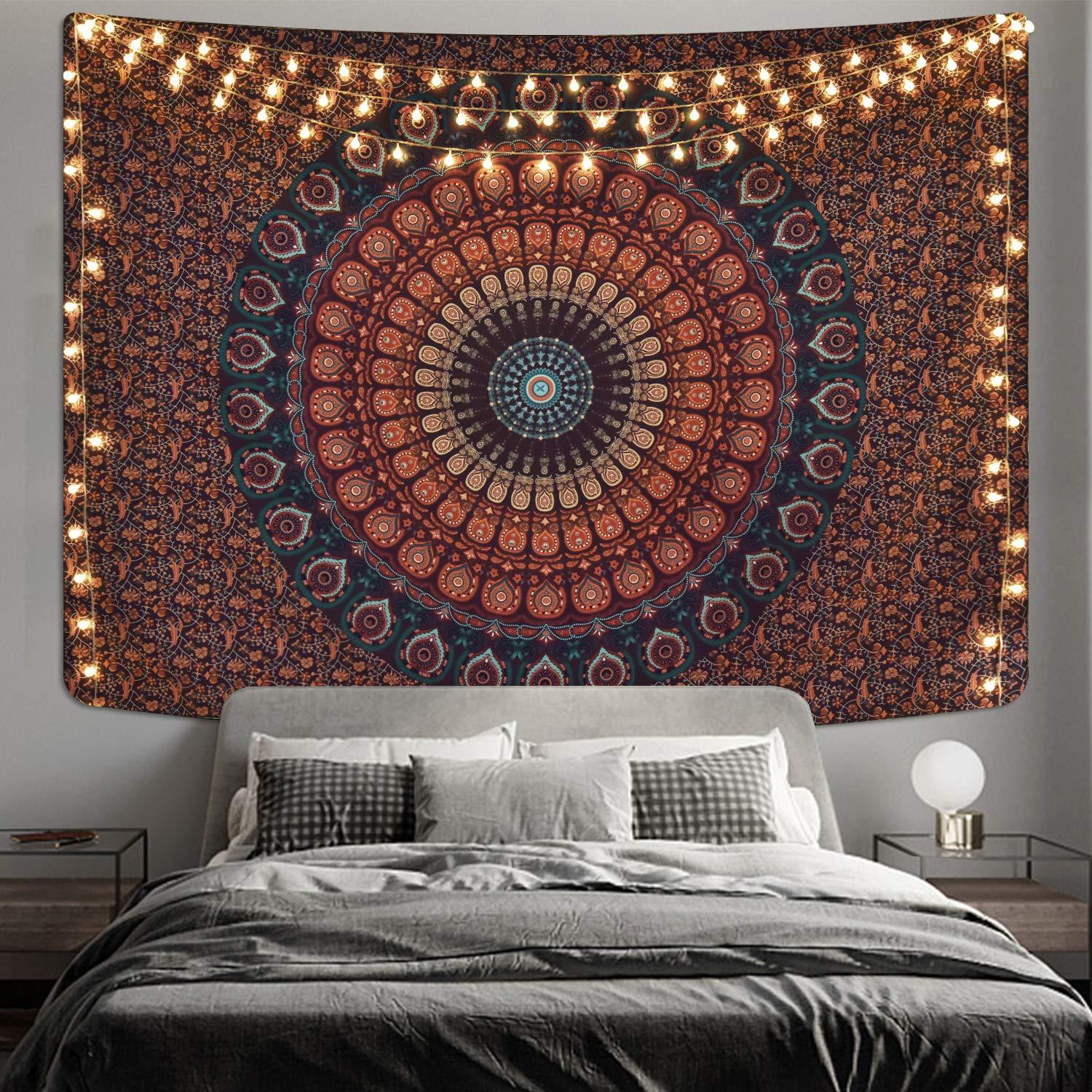
| Bedroom | Medium above bed | Soft tonal contrasts |
| Hallway | Series of small pieces | Monochrome story |
To keep tapestries feeling fresh, favor abstract or geometric patterns over ornate scenes, trim heavy fringes for a cleaner silhouette, and mount with a slim rod or invisible cleat so the textile reads like art. Pay attention to texture and color balance: a richly textured weave can carry a pared-back color scheme, while a flat weave with saturated pigments perks up minimalist rooms – both approaches make woven walls distinctly modern.

Update classic motifs with graphic abstracts, tonal gradients, and sustainable dye techniques
Reimagine heritage patterns by distilling florals, medallions, and pastoral scenes into bold, geometric forms that read like contemporary art from across a room. Use graphic abstracts to emphasize silhouette and movement, then layer subtle tonal gradients to give depth without busying the composition – think dusk-to-dawn ombres, ink-wash fades, or pixelated transitions that whisper color rather than shout it.
- crop and repeat: magnify a motif fragment for modern scale.
- Two-tone blocking: pair saturated accents with muted bases.
- Negative-space play: let unworked linen become part of the pattern.
Blend these visual updates with eco-aware production: adopt sustainable dye techniques like low-impact reactive dyes, cold-bath indigo, and plant-derived mordants to keep colorfastness while cutting water and chemical use. The palette choices and dyeing methods should be considered together so gradients are achievable without waste, and digital or pigment printing can be used for precision where hand-dyeing would be inefficient.
| Technique | Benefit |
|---|---|
| cold indigo vat | Lower energy, rich blues |
| Low-impact reactive | Shining, colorfast hues |
| Digital pigment printing | Zero-water precision |

Hanging like gallery art, practical mounting methods and optimal heights for every wall
Treat your tapestry like a framed showpiece: clean, purposeful mounts make even the most bohemian textile appear curated. Practical options range from minimalist to structural - from a slim wooden dowel or brass rod for a floating look to a hidden pocket that keeps fabric taut and wrinkle-free. Magnetic bars and leather straps offer quick swaps when you want seasonal changes, while clip rails and gallery hooks give museum-level stability for larger pieces. For lightweight vintage finds, simple adhesive loops or decorative nails preserve the fabric’s character without overpowering it.
Consider the wall’s function and sightlines when choosing height and hardware: measured placement turns a tapestry into architecture rather than mere decoration. common guidelines include:
- Above sofas: center 8-12 inches above the back of the sofa.
- Hallways: center at eye level (about 60-65 inches from the floor).
- Over fireplaces: balance scale-center midway between mantel and ceiling.
| Wall type | center height (approx.) |
|---|---|
| Living room (above sofa) | 58-62 in |
| Hallway | 60-65 in |
| Stairwell | Follow ascending sightline |

Styling tips for layering, lighting, and furniture pairings to balance texture and scale
Play with layers to let a tapestry sing without overwhelming the room: anchor large patterns with simple, low-profile furniture and offset heavy weaves with glossy or matte surfaces to create contrast. Scale is everything – a wall-sized tapestry needs breathing room, so keep adjacent pieces minimal and stagger textures (a leather sofa, a linen throw, a woven basket) to build depth. Small, bold tapestries act like art windows; cluster them in odd numbers above a narrow console or float a trio above a low bench for a modern gallery feel.
- Tip: Place chunky weaves next to sleek metals to balance warmth.
- Tip: Use rugs and throws in similar tones to tie layers together.
- Tip: Leave negative space-don’t crowd the tapestry with competing wall décor.
Light thoughtfully to reveal texture without washing it out: layer ambient, task, and accent lighting so the tapestry reads differently by day and night - a dimmable overhead plus directional picture lights or track fixtures highlights fibers and shadow. Pair furniture by scale rather than style; a monumental textile pairs well with slender, elevated legs or a floating media unit to keep sightlines clear.
| Tapestry Scale | Furniture Pairing | Lighting |
|---|---|---|
| Oversized | Low-profile sofa, open shelving | Soft wash + adjustable uplights |
| Medium | Accent chairs, slim console | Directional spot + warm LED |
| Small/Set | Clustered stools or stacked books | Accent lamps or picture lights |
Keep one element bold in each vignette – whether color, texture, or light – so the eye has a clear focal point.
Care, sourcing and custom alterations where to buy ethical weaves and how to adapt vintage pieces
Walls that wear history need a gentle hand: dry vacuum with a soft brush, avoid direct sunlight and rotate pieces seasonally to prevent fade. For washing, stick to spot-cleaning or professional textile conservators for antique dyes; modern ethical weaves often tolerate cold, gentle hand-washes and air drying. If you’re sourcing new pieces, prioritize labels that list organic fibers, low-impact dyes and fair-trade cooperatives – many small ateliers and online marketplaces now provide provenance details. Consider these quick buying and care pointers:
- Artisan co-ops: handmade kilims and jacquards with documented supply chains.
- Slow-design boutiques: small-batch modern tapestries with organic cotton or hemp.
- Local textile conservators: for appraisal and safe cleaning of vintage finds.
| fiber | Care | Best use |
|---|---|---|
| Wool | Spot clean, air out | Feature wall |
| Cotton | Gentle hand-wash | Throw or drape |
| Silk | Professional cleaning | Accent panels |
When vintage pieces call for a refresh, think of adaptations as respectful edits: re-lining with breathable muslin preserves structure, while adding modern hanging systems – a slim metal rod or leather straps – transforms scale and makes installation easier. Small alterations can make a tapestry multifunctional: add a lightweight backing and foam for a headboard, or sew subtle loops to hang as a room divider. Try these simple interventions:
- Edge-binding: reinforce fraying edges with matching or contrasting trim.
- modular mounting: section large tapestries into panels for gallery-style displays.
- Mixed-media inserts: introduce linen or denim patches to repair and modernize.
These modest changes keep the story of the textile intact while allowing it to speak in contemporary interiors.
To Conclude
Tapestries are no longer relics of a distant past but flexible canvases for contemporary living – a way to introduce texture, pattern and personality without rebuilding a room. Modernizing them is less about erasing tradition than about choosing scale, materials and placement that speak to present-day needs: oversized formats for impact, natural or recycled fibers for conscience, and pared-back palettes or abstract motifs for a current aesthetic. Whether you commission a weaver, upcycle an heirloom or make a simple wall hanging yourself, think of the piece as a room’s slow-moving focal point: it should anchor, not overwhelm. the revival of wall tapestries is an invitation to weave together history and innovation, stitching a tactile continuity between what once was and what now is.