Water is essential to a healthy landscape, but when it collects around your home, it can become one of the most expensive problems a homeowner faces. A clogged gutter, poorly positioned downspout, or yard that slopes toward the house may seem like a minor maintenance issue. Over time, however, these problems can contribute to foundation damage, basement leaks, soil erosion, and deteriorating exterior walls.
The good news? Many water-related home repairs are preventable. With properly maintained gutters, effective grading, and a drainage system suited to your property, you can direct rainwater away from vulnerable areas and reduce the risk of costly damage.
Think of drainage as part of your home’s first line of defense. It may not be the most noticeable feature of your property, but it plays an important role in protecting the structure, preserving your landscaping, and maintaining your home’s long-term value.
Here’s how to identify drainage problems, understand the systems that help prevent them, and make practical improvements before small issues become major repairs.
Why Proper Home Drainage Matters
Every time it rains, water travels across your roof, down your exterior walls, and onto the surrounding ground. Where that water goes next can make a significant difference to your home’s condition.
Ideally, rainwater should move away from the foundation without pooling against the house, washing away soil, or entering below-grade spaces.
When drainage is inadequate, several problems can develop.
Foundation Damage
Soil around a home can expand when wet and shrink as it dries. Depending on the soil type, these changes can create uneven pressure around the foundation. Water may also seep through existing cracks or openings, especially when moisture builds up against foundation walls.
Over time, persistent moisture and soil movement can contribute to cracking, water intrusion, and movement in parts of the structure.
Not every foundation crack indicates a serious structural problem. However, cracks that widen, show displacement, or appear alongside sticking doors and windows deserve professional evaluation.
Basement and Crawl Space Moisture
Water that collects near foundation walls may eventually find its way into a basement or crawl space through cracks, joints, and other vulnerable areas.
Excess moisture can damage stored belongings, finishes, insulation, and building materials. Damp environments can also encourage mold growth when suitable moisture and other conditions are present.
Exterior Wall and Landscaping Deterioration
Repeated exposure to moisture can contribute to staining, deteriorating finishes, and damage around exterior openings. Water flowing across the ground may also carry away mulch, expose plant roots, and erode soil near walkways or retaining walls.
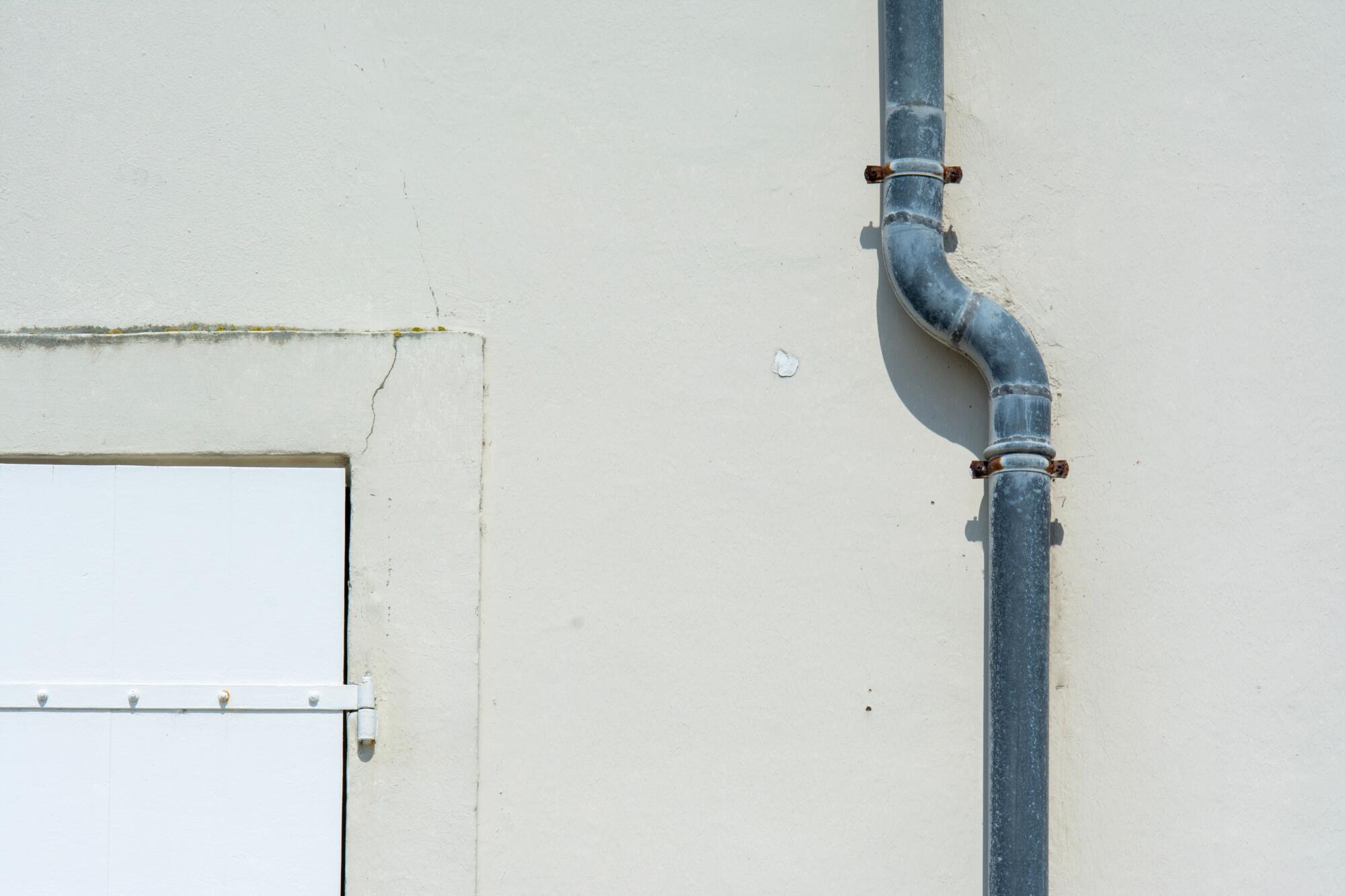
The featured photograph illustrates why exterior inspections matter: a metal downspout sits beside a light-colored wall with a visible crack near an access door. The photograph alone cannot establish whether drainage caused the crack, but it highlights the value of checking drainage components and nearby surfaces together.
More Expensive Maintenance
Drainage issues rarely improve simply because they’re ignored. A blocked gutter may overflow during the next storm, while a low spot beside the house may continue collecting water after every rainfall.
Addressing the source early is often more manageable than repairing multiple problems after moisture has spread.
1. Keep Gutters Clean and Working Properly
Gutters collect rainwater from the roof and direct it toward designated discharge points. When they become clogged, damaged, or poorly aligned, water can spill over the edges and fall directly beside the foundation.
What to Check
Inspect your gutters at least twice a year, and more often if your property has overhanging trees or experiences frequent storms.
Look for:
- Leaves, twigs, and other debris blocking the channels.
- Sagging sections or loose fasteners.
- Leaks at seams and joints.
- Standing water caused by inadequate slope.
- Downspouts that have become disconnected or blocked.
- Overflow marks or erosion beneath the roofline.
Clean gutters carefully using appropriate equipment, or hire a professional if the roofline is high, access is difficult, or conditions are unsafe.
Don’t Forget the Downspouts
A gutter system is only effective when water can leave the roof and discharge somewhere suitable.
Downspouts should direct runoff away from the foundation rather than releasing it immediately beside the wall. Extensions or properly designed underground drainage connections can help carry water farther away.
The appropriate discharge location depends on local grading, soil conditions, property boundaries, and applicable regulations. Avoid directing water toward neighboring properties, public walkways, or areas where it could cause erosion.
Practical tip: After a rainstorm, check whether water is flowing freely through the downspouts and whether puddles are forming around their outlets. These observations can reveal problems that aren’t obvious during dry weather.
2. Make Sure Your Yard Slopes Away From the House
Gutters handle water from the roof, but grading determines how rainwater moves across the ground.
If the soil slopes toward your home, rainwater may collect near the foundation instead of flowing away. Even a well-maintained gutter system cannot compensate for every grading problem.
What Proper Grading Looks Like
The ground immediately surrounding your home should generally slope away from the foundation. Building codes and local guidance may specify particular slopes or drainage requirements, so check the standards that apply to your property.
Walk around your home after rainfall and look for:
- Puddles beside foundation walls.
- Depressions where water repeatedly collects.
- Soil that slopes toward the building.
- Erosion channels running toward the house.
- Mulch or soil piled too high against siding or exterior finishes.
These signs may indicate that the ground needs attention.
How to Improve Yard Grading
For minor problems, adding suitable soil and reshaping the ground may help establish a consistent outward slope. The finished surface should direct water away without blocking weep holes, covering siding, or interfering with required clearances around doors and windows.
Take care around utility lines, underground pipes, trees, and existing drainage features.
More significant grading work may require professional planning, particularly on sloped lots or properties where runoff affects neighboring land.
Remember that grading is not simply about making the ground look level. The goal is to create a safe, predictable route for water to leave vulnerable areas.
3. Choose the Right Drainage System for Your Property
Some properties need more than gutters and surface grading. Clay-heavy soil, steep slopes, high groundwater, or recurring puddles may require additional drainage measures.
The best solution depends on where the water originates, how it travels, and where it can be discharged safely.
French Drains
A French drain typically uses a gravel-filled trench and a perforated pipe to collect and redirect groundwater or subsurface water.
It may help manage persistent wet areas or reduce water accumulation in selected locations. However, the trench, pipe depth, filter materials, and outlet must be designed appropriately for the site’s conditions.
A French drain is not automatically the best choice for every wet yard, and an improperly installed system can become clogged or move water to an unsuitable location.
Channel Drains
Channel drains are narrow surface drains often installed across driveways, patios, garage entrances, or other paved areas where water flows over a hard surface.
They collect runoff and carry it toward an appropriate discharge point. Proper installation includes adequate slope, suitable capacity, and routine debris removal.
Catch Basins and Yard Drains
Catch basins collect surface water entering through a grate. Underground pipes then transport the water to an approved discharge point or drainage system.
These systems can help address recurring puddles in low areas, provided the outlet is suitable and the system is maintained.
Sump Pumps and Foundation Drainage
Homes with basements or below-grade spaces may use foundation drainage and sump pumps to manage water that reaches a collection point.
A sump pump can be helpful where the site’s conditions and drainage design call for one, but it requires maintenance and a reliable discharge route. In locations where outages are a concern, a properly designed backup system may provide additional protection.
Before installing a new drainage system, identify the actual source of the water. A blocked gutter, plumbing leak, grading issue, and high groundwater level require different solutions.
4. Recognize the Warning Signs of Poor Drainage
You don’t need to wait for a flooded basement to know something may be wrong. Many drainage problems leave visible clues around the exterior of a home.
Exterior Signs to Watch For
Inspect your property for:
- Water stains beneath gutters or downspouts.
- Cracks or deterioration around exterior walls.
- Soil erosion near the foundation.
- Persistent puddles after rain.
- Algae or unusually damp areas on exterior surfaces.
- Loose or separated downspout connections.
- Water entering through doors or below-grade openings.
The wall crack visible in the featured photograph is a useful reminder to monitor changes over time. Take dated photographs of suspicious cracks and note whether they widen or develop other symptoms.
Interior Signs That May Point to Drainage Problems
Inside the home, watch for damp basement walls, recurring water on the floor, musty odors, peeling finishes, or moisture damage near the base of walls.
These symptoms can have several causes, including plumbing leaks, condensation, roof leaks, or exterior drainage problems. A professional assessment can help identify the source instead of relying on guesswork.
When to call an expert: Seek prompt professional evaluation if cracks are widening, walls appear to bow, floors become uneven, water repeatedly enters the basement, or doors and windows suddenly become difficult to operate. Significant structural changes or rapidly worsening water intrusion should not be treated as routine cosmetic maintenance.
5. Maintain Your Drainage System Throughout the Year
Even a well-designed drainage system needs regular care. Leaves, sediment, roots, and shifting soil can reduce its effectiveness over time.
A simple maintenance routine makes it easier to spot problems early.
Spring
- Clear debris from gutters and downspouts.
- Inspect winter-related damage and loose connections.
- Check for soil erosion and newly formed depressions.
- Test accessible drainage outlets where appropriate.
Summer
- Look for pooling after heavy thunderstorms.
- Inspect exposed pipes and drain covers.
- Check whether landscaping changes have redirected runoff.
- Repair minor erosion before it expands.
Fall
- Remove fallen leaves from gutters.
- Trim vegetation that obstructs drainage.
- Check downspout connections before seasonal storms.
- Clear accessible surface drains of accumulated debris.
Winter
In freezing climates, check for ice buildup, blocked outlets, and water that may freeze on walkways. In warmer climates, use the season to inspect drainage before periods of heavy rain.
Avoid climbing onto roofs or entering confined drainage spaces without appropriate training and equipment. Hire a qualified professional when inspection or cleaning presents a safety risk.
6. Avoid Common Drainage Mistakes
A drainage improvement can create new problems if water is simply redirected without considering the surrounding property.
Sending Water Toward Another Building
A downspout extension may solve a puddle beside your house while creating a new one near a neighbor’s property. Choose discharge locations carefully and follow local requirements.
Covering Foundation or Wall Openings
Adding soil or mulch too high against an exterior wall can cover important openings and create moisture problems. Maintain the clearances required by the building’s construction and applicable code.
Treating Every Crack as a Drainage Problem
Moisture can contribute to deterioration, but not every crack is caused by water. Structural movement, material shrinkage, settlement, and other factors may also be involved.
Repairing the visible crack without identifying its cause may leave the underlying problem unresolved.
Installing Drains Without Planning the Outlet
A drain needs somewhere appropriate to send the collected water. Before installation, confirm that the discharge location is permitted, has sufficient capacity, and will not create erosion or flooding elsewhere.
Ignoring Maintenance
Underground drainage pipes and surface drains can become blocked. Keep accessible grates clear, inspect visible outlets, and arrange periodic professional maintenance when needed.
7. When Should You Hire a Drainage Professional?
Simple maintenance, such as clearing accessible gutter debris or removing leaves from a surface drain, may be manageable for homeowners who can do so safely.
More complicated problems deserve expert attention.
Consider consulting a drainage contractor, qualified building professional, or structural engineer when:
- Water repeatedly enters your basement or crawl space.
- Foundation cracks are widening or show displacement.
- The yard remains saturated long after rainfall.
- Several drainage systems appear to be failing.
- Water flows toward the house despite grading improvements.
- You are considering excavation or installing a French drain.
- Drainage work could affect retaining walls, utilities, or neighboring properties.
A thorough assessment should consider the roof drainage system, ground slope, soil conditions, visible foundation defects, and the intended discharge location.
Depending on the issue, you may need more than one specialist. For example, a drainage contractor may address surface runoff, while a structural engineer evaluates significant foundation movement.
Before approving a major project, ask for a clear explanation of the water source, the proposed solution, maintenance requirements, and any limitations. Understanding the cause helps you invest in repairs that address the problem rather than merely hiding its symptoms.
8. Think of Drainage as Long-Term Home Protection
Drainage maintenance may not deliver the dramatic visual transformation of a kitchen renovation or a new patio, but it can protect the features of your home that are much harder to replace.
A functioning gutter system, properly graded yard, and suitable drainage network work together to manage rainwater before it causes damage.
These improvements can also help protect landscaping, reduce erosion, preserve usable outdoor spaces, and make moisture problems easier to manage.
For homeowners preparing to sell, visible drainage issues may also raise questions during property inspections. Maintaining gutters, correcting obvious runoff problems, and documenting completed repairs can help demonstrate responsible property care. No drainage system can guarantee a problem-free inspection, but proactive maintenance is a sensible step.
The most effective approach is to understand how water moves across your property, monitor the areas where it collects, and respond when conditions change.
Conclusion: Keep Water Moving in the Right Direction
Proper home drainage is one of the most practical ways to reduce the risk of water-related damage. Gutters capture roof runoff, downspouts carry it away, grading guides surface water, and drainage systems help manage moisture that collects underground or in low areas.
The key is making these components work together.
Start with a walk around your home after the next rainfall. Look for overflowing gutters, disconnected downspouts, puddles beside the foundation, and soil that slopes toward the walls. Address simple maintenance needs promptly, and seek professional advice when problems persist or structural warning signs appear.
A little attention today can help prevent much bigger headaches tomorrow. When it comes to protecting your home, keeping water away from the foundation is a smart investment in the building’s long-term condition and value.
KEY TAKEAWAYS
- Keep gutters clear. Blockages and leaks can send roof runoff directly toward the foundation.
- Extend downspouts appropriately. Discharge water at a suitable location away from vulnerable areas.
- Check yard grading. The ground near your home should generally guide surface water away from the foundation.
- Choose drainage systems carefully. French drains, channel drains, catch basins, and sump pumps address different conditions.
- Watch for warning signs. Pooling water, damp basement walls, erosion, and changing cracks deserve attention.
- Maintain drainage year-round. Seasonal inspections help identify blockages and damage before they worsen.
- Avoid redirecting water carelessly. Drainage improvements should not create new problems for neighboring properties.
- Get professional help when needed. Persistent leaks and significant structural changes require more than routine maintenance.
FAQ SECTION
1. Why is proper drainage important for a home’s foundation?
Proper drainage helps prevent water from accumulating against foundation walls. Excess moisture can contribute to water intrusion, soil movement, erosion, and deterioration of vulnerable materials. Directing runoff away from the home helps reduce these risks.
2. How far should downspouts extend from the house?
Downspouts should discharge far enough from the foundation to prevent water from collecting beside it. The appropriate distance depends on the home’s grading, soil, drainage design, and local requirements. A properly designed extension or underground connection can help carry runoff to a suitable discharge point.
3. What is the best way to improve drainage around a house?
Start by cleaning gutters, checking downspouts, and examining the slope of the ground around the foundation. Minor grading improvements may help with surface runoff, while persistent pooling or groundwater problems may require a professionally designed drainage system.
4. Can poor drainage cause foundation cracks?
Poor drainage can contribute to foundation problems by allowing water to accumulate near the structure, increasing moisture-related pressure, or contributing to changes in surrounding soil. However, cracks can have other causes. Widening cracks, displacement, or cracks accompanied by other structural changes should be professionally evaluated.
5. Is a French drain always the best solution for a wet yard?
No. A French drain may help collect subsurface water, but it is not appropriate for every drainage issue. Surface grading, gutter repairs, channel drains, catch basins, or other solutions may be more suitable depending on the source of the water and the property’s conditions.
6. How often should gutters and drainage systems be inspected?
Inspect gutters at least twice a year and more frequently when trees or severe weather increase debris buildup. Check visible drainage outlets after heavy rain and arrange maintenance as needed. Underground systems may require additional inspection if water begins pooling or drainage performance declines.
7. What are the signs of poor drainage around a foundation?
Common warning signs include persistent puddles, soil erosion, damp basement walls, water stains near downspouts, recurring moisture intrusion, and changes in foundation cracks. These signs do not always share the same cause, so persistent or serious problems should be assessed professionally.
8. Can proper drainage increase a home’s value?
Proper drainage can help preserve a home’s condition, reduce the risk of preventable water damage, and reassure prospective buyers that important maintenance has been addressed. It does not guarantee a higher selling price, but well-maintained drainage is a valuable part of responsible homeownership.