Introduction
Finding a crack in your foundation is one of those home maintenance moments that can make you stop and wonder: Is this normal, or is something seriously wrong?
The answer isn’t always obvious.
Concrete and masonry foundations can develop cracks for a variety of reasons. Some are associated with normal material shrinkage or minor movement. Others can be connected to soil movement, water pressure, settlement, or movement of the foundation itself.
That’s why simply looking at a crack and deciding that it’s either “nothing” or a major structural problem can be misleading.
The location, direction, width, pattern, and surrounding conditions all matter.
For homeowners, three crack patterns are particularly useful to understand: vertical cracks, horizontal cracks, and stair-step cracks.
Here’s what they can tell you—and when it’s worth getting a closer look.
Not Every Foundation Crack Means Trouble
First, let’s clear up one common misconception: a crack in your foundation does not automatically mean your house is failing.
Concrete can crack as it cures and shrinks. Foundations can also experience minor movement over time.
The Foundation Performance Association notes that small hairline cracks can be associated with initial settling, while certain diagonal cracks and other patterns can be more significant indicators of foundation movement.
The tricky part is knowing where a particular crack falls on that spectrum.
That’s why homeowners should look at the bigger picture rather than focusing on the crack alone.
Ask yourself:
- How wide is the crack?
- Is it getting larger?
- Is the wall bowing or leaning?
- Is there water coming through it?
- Are there similar cracks nearby?
- Are doors or windows suddenly sticking?
- Are floors noticeably sloping?
- Does the crack appear alongside other signs of movement?
A crack becomes much more interesting—and potentially more concerning—when it appears alongside several of these symptoms.
Vertical Foundation Cracks
Vertical cracks are among the most common types homeowners encounter in concrete foundation walls.
A relatively small, straight vertical crack can sometimes be associated with concrete shrinkage or minor settlement. That doesn’t mean it should automatically be ignored, but it may not have the same significance as a large horizontal crack accompanied by wall movement.
The surrounding conditions are important.
For example, if a vertical crack is accompanied by water entering the basement, it should be investigated from a moisture-control perspective even if there is no obvious structural movement.
Basement moisture can come from several sources, including groundwater, rainwater, poor grading, inadequate gutters and downspouts, and other drainage problems.
When a Vertical Crack Deserves More Attention
Pay closer attention if a vertical crack:
- Is noticeably widening.
- Is displaced, rather than simply a narrow line.
- Allows water to enter.
- Appears alongside sloping floors.
- Is accompanied by sticking doors or windows.
- Occurs with other cracks in the same area.
- Appears to be changing over time.
A single photograph can’t determine the cause of a crack. If you’re seeing several warning signs together, professional evaluation is a sensible next step.
Horizontal Foundation Cracks
Horizontal cracks deserve particular attention, especially in concrete-block foundation walls.
Why?
Because a horizontal crack can be associated with lateral pressure against the foundation wall. Wet soil, poor surface drainage, and frost can all contribute to pressure against below-grade walls. The American Society of Home Inspectors notes that horizontal cracks in block foundation walls can be associated with inward wall movement and should be taken seriously.
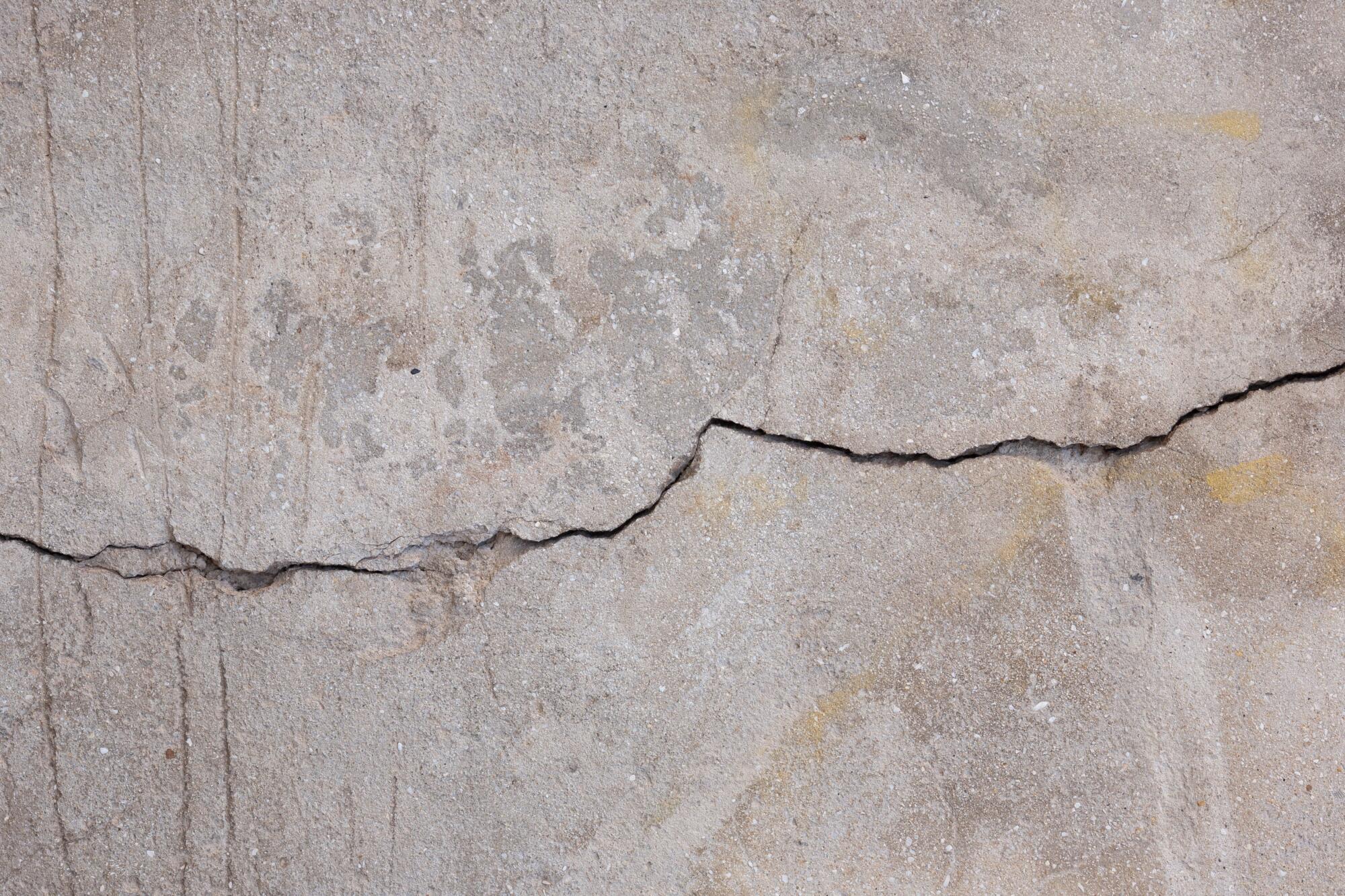
That’s why the featured image for this article is useful. It shows a prominent horizontal crack running through a concrete surface.
The photograph itself doesn’t tell us why that crack formed or whether the wall has moved. But it demonstrates why orientation matters when you’re looking at foundation damage.
What Should You Look For?
If you find a horizontal foundation crack, look beyond the crack itself.
Check for:
- Bowing or leaning of the foundation wall.
- Multiple horizontal cracks.
- Stair-step cracks nearby.
- Vertical cracks near corners.
- Noticeable wall displacement.
- Water pressure or drainage problems outside.
- Soil that slopes toward the house.
- Gutters or downspouts discharging close to the foundation.
The combination of cracking and wall movement is more meaningful than the orientation of the crack by itself.
In other words, don’t panic because you found a horizontal crack—but don’t casually cover it with paint and forget about it either.
Stair-Step Foundation Cracks
Stair-step cracks get their name from the way they travel diagonally along the mortar joints of a masonry or concrete-block wall.
Instead of running in a straight line, the crack moves up or down in a pattern that resembles a staircase.
These cracks can have several causes. The American Society of Home Inspectors explains that stair-step cracks can sometimes result from minor footing movement, shrinkage, or wall movement. However, wider cracks or stair-step cracks combined with other forms of movement can indicate a more significant problem.
Where Stair-Step Cracks Appear Matters
Stair-step cracks around openings such as windows can occur at naturally weaker points in a wall.
But a stair-step crack that appears alongside:
- A horizontal crack,
- A vertical or shear crack,
- Floor movement,
- Wall displacement, or
- Other evidence of settlement
deserves a professional review.
The pattern is therefore a clue—not a diagnosis.
What Does Foundation Settlement Look Like?
Foundation settlement occurs when part of a structure moves downward relative to another part.
When settlement is uneven, it’s called differential settlement.
This movement can affect more than the foundation itself. It can contribute to cracking, out-of-level floors, walls that are no longer plumb, and doors or windows that stick.
That’s why homeowners shouldn’t look at foundation cracks in isolation.
Imagine you discover a small crack in the basement wall. On its own, it may not tell you much.
But if you’ve also noticed that a bedroom floor slopes, a door suddenly sticks, and a crack above a window has grown, the overall pattern deserves more attention.
The Signs That Matter Beyond the Crack
Sometimes the most useful clues aren’t actually cracks.
Walk through your home and look for changes you’ve noticed recently.
Doors and Windows
Are doors suddenly difficult to close? Are windows sticking when they previously worked normally?
These symptoms can sometimes accompany differential foundation movement.
Sloping Floors
A floor that has always had a slight slope isn’t necessarily evidence of foundation trouble.
A new or noticeably worsening slope, however, is worth investigating—particularly if it occurs with foundation cracking or other changes.
Gaps and Separations
Look for new gaps around:
- Window frames
- Door frames
- Baseboards
- Flooring
- Exterior siding
- Porches or additions
Again, none of these signs proves that you have a structural problem. They are simply pieces of the puzzle.
Water Intrusion
Water stains, dampness, efflorescence, or actual water entering through a foundation crack add another layer to the problem.
Basement moisture can be caused by drainage and water-management issues even when the foundation itself remains structurally sound.
That means the right repair isn’t always “seal the crack.” You may need to address the source of the water.
When Should You Call a Professional?
If you’re unsure about a foundation crack, having it evaluated is usually more useful than guessing.
Consider bringing in a qualified professional when you notice:
- A wide or rapidly changing crack.
- A long horizontal foundation crack.
- Stair-step cracking combined with other cracks.
- A visibly bowing or displaced wall.
- Significant floor slope or changes in level.
- Multiple cracks appearing in the same area.
- Water entering through foundation walls.
- Cracking combined with sticking doors or windows.
- Evidence that the condition is getting worse.
The goal isn’t to assume the worst. It’s to determine what is actually happening.
A professional may evaluate the wall’s alignment, crack characteristics, drainage conditions, soil conditions, and other evidence of movement before recommending a repair.
Don’t Rush to Patch the Crack
One of the easiest mistakes homeowners can make is repairing the visible crack before understanding why it happened.
A patch may make the wall look better, but it doesn’t necessarily address movement, water pressure, drainage, or settlement.
Before repairing a significant crack, consider documenting it.
Take a clear photograph and record:
- The date.
- Approximate crack width.
- Location.
- Whether water is present.
- Whether nearby doors, windows, or floors have changed.
If the crack appears to be changing, that information can be useful to the professional evaluating the property.
Crack monitoring can also help establish whether movement is occurring over time. ASHI notes that crack-monitoring devices can be used to determine whether movement is seasonal or continuing.
Don’t Forget About Drainage
Your foundation doesn’t exist in isolation. The ground around your house can have a major effect on what happens below grade.
Water management is especially important.
Check your property for:
- Gutters that overflow.
- Downspouts that discharge beside the foundation.
- Soil that slopes toward the house.
- Standing water near foundation walls.
- Poorly functioning drainage systems.
- Areas where soil has settled against the foundation.
The University of Minnesota Extension notes that poor grading and defective or missing gutters and downspouts are common contributors to basement moisture problems.
This is one reason foundation inspections should consider the surrounding site—not just the crack itself.
What Homeowners Can Do Right Now
If you’ve discovered a foundation crack, you don’t necessarily need to start planning a major renovation.
Start with a simple inspection.
Your Foundation Crack Checklist
- Photograph it.
Take several clear photos from different angles. - Note its location.
Record whether it’s in a basement wall, garage, exterior wall, or another area. - Look at its direction.
Is it vertical, horizontal, diagonal, or stair-step? - Check for movement.
Look for bowing, displacement, or other changes in the wall. - Check for water.
Look for dampness, staining, or active leaks. - Inspect drainage outside.
Make sure water isn’t being directed toward the foundation. - Look for other symptoms.
Check floors, doors, windows, walls, and trim. - Get professional advice when the pattern is concerning.
A structural engineer or qualified foundation professional can help determine whether further investigation is appropriate.
The Bottom Line
Foundation cracks can look alarming, but the crack itself is only part of the story.
A small vertical crack may have a very different cause from a long horizontal crack accompanied by a bowing wall. A stair-step crack may be relatively minor in one situation but more concerning when it appears with other evidence of movement.
The best approach is to look for patterns rather than panic over a single line in the concrete.
Pay attention to changes, document what you see, keep water away from the foundation, and bring in a qualified professional when cracks are large, changing, combined with movement, or accompanied by other warning signs.
Your foundation is literally supporting your home. A little attention now can help you understand whether that crack is simply something to monitor—or a problem that needs to be addressed.
KEY TAKEAWAYS
- Not every foundation crack is a structural emergency. Concrete and masonry can crack for several reasons.
- Horizontal cracks deserve careful attention, particularly when they occur with foundation wall movement or bowing.
- Vertical cracks can have different causes, including shrinkage, settlement, or other movement.
- Stair-step cracks follow masonry mortar joints and should be evaluated in context with their width, location, and surrounding conditions.
- Look beyond the crack. Sloping floors, sticking doors, displaced walls, and gaps can provide important clues.
- Water management matters. Poor grading and ineffective gutters or downspouts can contribute to basement moisture problems.
- Document changes over time. Photos and measurements can help establish whether a crack is changing.
- When several warning signs appear together, professional evaluation is worthwhile.
FAQ SECTION
Are all foundation cracks serious?
No. Foundation cracks can have many causes, including concrete shrinkage, minor settlement, soil movement, and water pressure. The size, pattern, location, movement, and other symptoms should all be considered before determining how concerning a crack may be.
Are horizontal foundation cracks worse than vertical cracks?
Not necessarily in every situation, but horizontal cracks—particularly in concrete-block foundation walls—can be associated with lateral soil pressure and inward wall movement. They deserve careful evaluation, especially when accompanied by bowing or other cracks.
What causes stair-step cracks in a foundation?
Stair-step cracks follow the mortar joints of masonry walls. They can be associated with footing movement, shrinkage, or wall movement. Wider cracks or stair-step patterns combined with other forms of movement are more concerning.
Can foundation cracks cause basement leaks?
They can provide a pathway for water, but a basement leak isn’t necessarily caused by structural foundation movement. Groundwater, poor grading, inadequate gutters, and drainage problems can also contribute to basement moisture.
When should I have a foundation crack inspected?
Consider professional evaluation when a crack is large, changing, accompanied by wall movement, appears with other cracks, allows significant water intrusion, or occurs alongside symptoms such as sloping floors or sticking doors and windows.
Should I fill a foundation crack myself?
Small cosmetic cracks may sometimes be addressed with appropriate repair products, but homeowners should understand the cause first. Patching a significant crack without investigating the underlying condition may hide the symptom without addressing the source.
How can I tell if a foundation crack is getting worse?
Photograph and document the crack periodically, noting its approximate width and appearance. Professional crack-monitoring methods can also be used to determine whether movement is occurring over time.