There comes a point when you look around your house and think, “We love this home—but we don’t love living in it anymore.”
Maybe the kitchen is too small. The bedrooms don’t work for your growing family. You need a home office, another bathroom, better storage, or simply more usable space.
That’s when the big question appears: Should you remodel or move?
In 2026, this decision deserves more thought than simply comparing the cost of a renovation with the price of another house. Mortgage rates, selling expenses, closing costs, renovation costs, available equity, neighborhood preferences, and the practical disruption of construction can all change the equation.
Mortgage rates remain an important part of that calculation. As of September 24, 2026, Freddie Mac’s weekly survey put the average 30-year fixed mortgage rate at 7.03%, compared with 6.30% a year earlier.
That doesn’t automatically make remodeling the better financial choice—or moving the worse one. It simply means homeowners should look at the total cost of each option.
And sometimes, the answer isn’t purely financial.
Your neighborhood, commute, floor plan, school preferences, outdoor space, and how you actually use your home matter too.
Here’s how to think through the decision.
Start With the Real Problem
Before getting contractor estimates or browsing real estate listings, ask a simpler question:
What exactly isn’t working about my current home?
Make two lists.
Things You Can’t Change Easily
These might include:
- Location
- Commute
- Lot size
- Neighborhood
- School district
- Proximity to family
- Traffic and noise
- Overall property setting
If your biggest complaints are on this list, remodeling may have limited ability to solve them.
You can create a beautiful kitchen, but you can’t remodel your house into a different neighborhood.
Things You Can Change
These are usually more remodeling-friendly:
- Kitchen layout
- Bathroom size and finishes
- Storage
- Flooring
- Lighting
- Interior walls
- Home office space
- Outdoor living areas
- Energy efficiency
- Bedroom configuration
If most of your frustrations fall into this category, remodeling may be worth exploring.
What Does a Home Remodel Cost in 2026?
There isn’t one universal remodeling price because projects vary dramatically.
According to Angi’s 2026 data, whole-house remodeling averages around $52,000, although projects can range from a few thousand dollars to well over $200,000 depending on the home’s size, rooms involved, materials, and scope.
Individual projects can be much more manageable.
For example, Angi currently estimates average kitchen remodeling costs around $27,000, with typical projects varying considerably based on scope and materials. Bathroom remodeling averages around $12,000 in its 2026 data.
These numbers are useful for establishing a starting point—not for creating your actual budget.
Labor rates, permits, structural conditions, material selections, and your location can change the final number substantially.
Don’t Forget the “While We’re Here” Costs
One of the biggest remodeling surprises is discovering additional work after construction begins.
You open a wall and discover outdated wiring.
You remove flooring and find water damage.
You discover that plumbing needs to be relocated.
Suddenly, the project you thought would cost $40,000 is moving toward $50,000 or $60,000.
That’s why a contingency fund matters. Angi recommends setting aside roughly 10% to 20% for unexpected expenses when planning a renovation.
The Featured Image Tells an Important Part of the Story
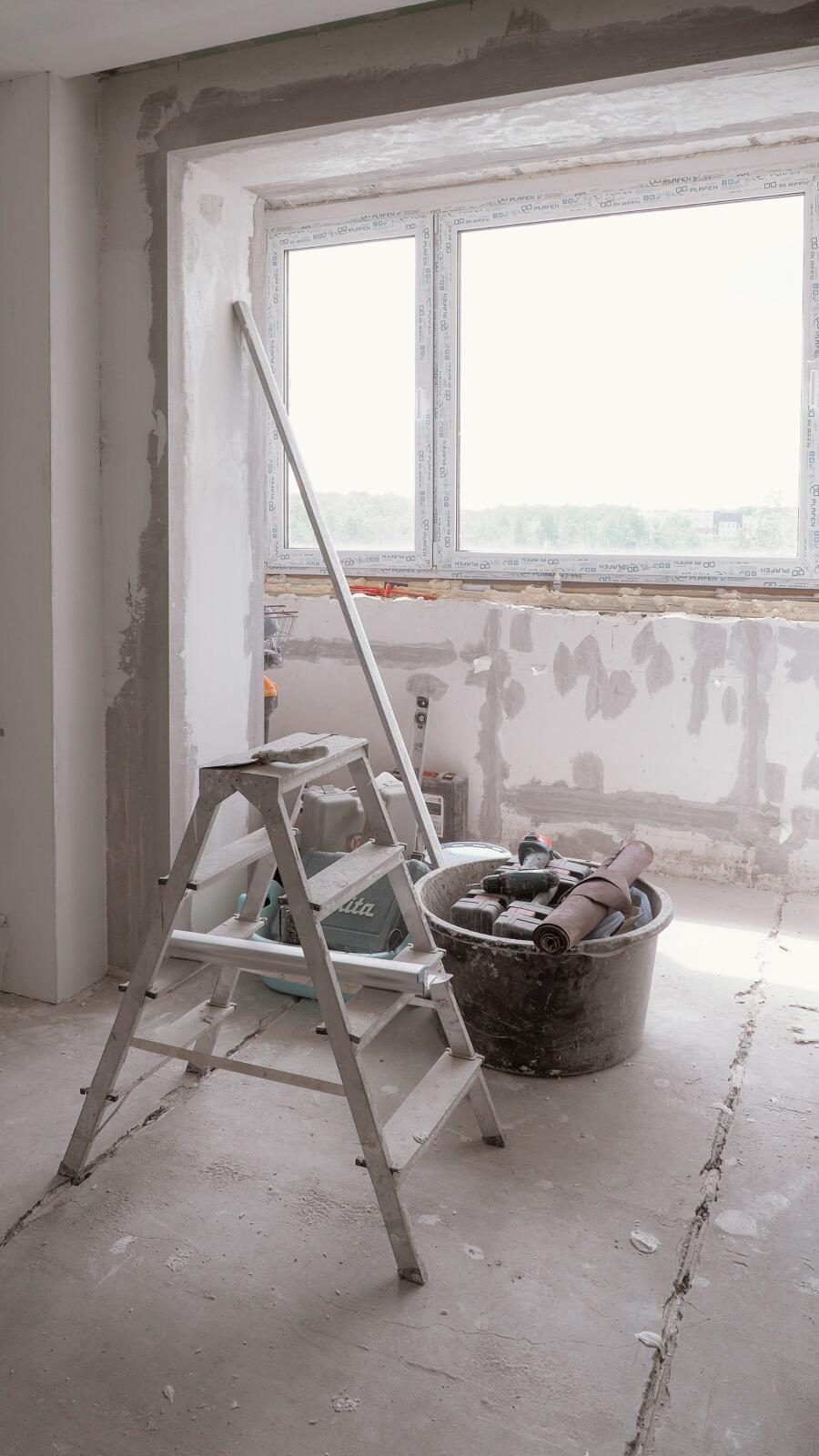
The room shown in our featured image is a good reminder that remodeling isn’t just a number on a spreadsheet.
There are tools on the floor, an unfinished wall, construction materials around the window, and a ladder occupying valuable floor space.
This is what a remodeling project looks like before the finished photograph.
A major renovation can mean:
- Dust and construction debris
- Noise
- Workers in your home
- Temporary loss of a kitchen or bathroom
- Furniture that needs to be moved
- Meals prepared elsewhere
- Unexpected delays
- Temporary accommodations for some projects
None of these automatically make remodeling a bad idea. They simply belong in the calculation.
If you can comfortably live through the disruption—or temporarily move out—the project may be easier to manage.
What Does It Cost to Move?
Moving has its own set of expenses, and they can be surprisingly easy to overlook.
If you’re selling your current home, you may encounter:
- Real estate commissions
- Seller closing costs
- Repairs or improvements before listing
- Cleaning
- Staging
- Moving services
- Temporary storage
- New-home inspection
- Buyer’s closing costs
- New furniture
- Utility setup
- Immediate repairs at the new property
NerdWallet estimates that selling costs can reach roughly 10% to 15% of the home’s sale price, depending on the transaction and local circumstances.
On the buying side, the Consumer Financial Protection Bureau says closing costs typically run around 2% to 5% of the purchase price, excluding the down payment, although the actual amount varies.
So a move involves considerably more than the difference between your home’s current value and the price of the next house.
Don’t Ignore Your Existing Mortgage
This may be one of the most important questions in the remodel-versus-move decision:
What mortgage rate do you currently have?
If you’ve been in your home for several years and locked in a relatively low fixed rate, moving could mean taking out a new mortgage at today’s rates.
For context, Freddie Mac’s average 30-year fixed rate was 7.03% on September 24, 2026.
Imagine, purely as an illustration, that you currently have a $300,000 mortgage at 4% and would need a similar $300,000 mortgage on another property at about 7%.
The principal-and-interest payment would be substantially higher at the newer rate, before accounting for taxes, insurance, or other housing costs.
That’s why homeowners shouldn’t compare “my remodeling quote” with “the price of the new house.”
Instead, compare the entire financial picture.
Remodel vs. Move: Compare the Full Cost
A simple comparison can help.
| Remodeling | Moving |
| Contractor costs | Purchase price |
| Materials | Down payment |
| Permits | Buyer closing costs |
| Temporary housing | Selling costs |
| Unexpected repairs | Moving company |
| Financing costs | Storage |
| Design fees | Immediate repairs |
| Lost use of rooms | New furnishings |
| Potential property-value impact | New mortgage payment |
Neither column is automatically cheaper.
The numbers need to be specific to your situation.
When Remodeling May Make Sense
Remodeling can be worth considering when the house itself is fundamentally right but the interior no longer fits your needs.
For example, you may have:
A Great Location
You love your neighborhood, commute, neighbors, yard, or proximity to family.
A Manageable Renovation
You can solve your biggest problems without rebuilding half the house.
Significant Home Equity
You may have substantial equity that gives you options for funding improvements, subject to your financial circumstances and the cost of borrowing.
A Favorable Existing Mortgage
If moving means replacing a low-rate mortgage with a considerably higher-rate loan, the financing difference deserves serious consideration.
A Home You Otherwise Love
Sometimes the house doesn’t need replacing. It simply needs to evolve.
When Moving May Make More Sense
A renovation has limits.
Moving may be worth considering when your biggest problems involve the property’s fundamentals.
The Location Doesn’t Work
If you’re tired of the commute or want to be closer to family, a remodel can’t solve that.
You Need Much More Space
If your household has outgrown the property and adding space would require a major addition, compare that project with the cost of buying a larger home.
The Floor Plan Can’t Be Fixed Easily
Some homes simply don’t have enough flexibility for the layout you want.
Major Systems Need Replacement
If you’re facing several expensive projects at once—roof, foundation, HVAC, plumbing, electrical, and more—calculate the combined cost before deciding.
You Don’t Want a Construction Project
This matters.
A renovation requires decisions, scheduling, contractor coordination, material selections, and patience.
If that process sounds exhausting rather than exciting, moving may better match your priorities.
Consider the Value of the Renovation
A remodel isn’t necessarily about making every dollar back when you sell.
You may renovate because you want to enjoy the house for the next 10 years.
Still, resale value deserves a place in the conversation.
The National Association of REALTORS®’ Remodeling Impact research tracks homeowner satisfaction, buyer demand, and estimated cost recovery for different remodeling projects. Its current remodeling resources note that some projects can recover substantially more of their cost than others.
That means you shouldn’t assume:
$80,000 renovation = $80,000 increase in home value.
It may—or may not.
A project can provide tremendous lifestyle value without returning its full cost at resale.
That’s perfectly reasonable if you plan to stay long enough to enjoy it.
Build Two Realistic Budgets
Before making your decision, create two separate budgets.
Budget A: Stay and Remodel
Include:
- Contractor estimates
- Materials
- Permits
- Design costs
- Structural or mechanical repairs
- 10%–20% contingency
- Temporary living expenses
- Financing costs
- Lost use of rooms
- Expected maintenance after completion
Angi’s 2026 remodeling guidance similarly emphasizes accounting for permits, unexpected work, and potential structural repairs when establishing a project budget.
Budget B: Sell and Move
Include:
- Current mortgage payoff
- Repairs before listing
- Selling expenses
- Agent compensation
- Moving costs
- Storage
- New-home down payment
- Buyer’s closing costs
- New mortgage payment
- Immediate repairs or improvements
Then compare the total cost over the period you expect to remain in the home.
That’s much more useful than comparing two headline numbers.
Think Beyond Money
Here’s where the decision becomes personal.
Ask yourself:
How long do you plan to stay?
If you’re likely to stay for another 10 years, a renovation that makes everyday life dramatically better may have substantial value.
If you’re considering another move within two years, a major personalized remodel requires more careful consideration.
How disruptive can your household be?
Can you live without a kitchen for eight weeks?
Can you work around contractors?
Do you have young children or pets?
Could you temporarily live somewhere else?
What do you actually want?
This is the question that can get lost in the financial analysis.
If you already know you want a different neighborhood, more land, or a fundamentally different house, spending heavily on remodeling may not address the real goal.
A Simple Remodel-or-Move Checklist
Before making a decision, write down your answers:
- What are the three biggest problems with my current home?
- Can those problems realistically be fixed?
- What would the renovation actually cost?
- What would the renovation cost with a 15% contingency?
- What would it cost to sell my current house?
- What would closing costs and moving expenses add?
- What would my new mortgage payment look like?
- What interest rate would I likely receive?
- How much do I value my current neighborhood?
- How long do I realistically plan to stay?
- How much disruption can my household tolerate?
- Which option gives me the home and lifestyle I actually want?
That last question matters just as much as the spreadsheet.
Don’t Make the Decision From a Single Estimate
Before committing to a major remodel, get detailed estimates from qualified professionals.
For a substantial project, compare multiple bids and make sure the scope of work is clearly defined.
If you’re considering moving, get realistic estimates of your home’s current market value and the likely costs associated with selling and buying.
And don’t forget that renovation budgets can change once walls are opened. The same is true of moving budgets once a transaction is underway.
The more realistic your numbers are, the more useful your comparison becomes.
Conclusion: Make the House Fit Your Life
The remodel-or-move question doesn’t have one universal answer.
For one homeowner, remodeling a beloved house in a great location may make sense. For another, no amount of new cabinetry or added square footage can solve a location or lifestyle problem.
The best place to start is not with a contractor or a real estate listing.
Start with what isn’t working.
Then put real numbers against both options.
In 2026, with mortgage rates around 7% and renovation costs that can vary dramatically by project, understanding the full financial picture is especially important.
And remember the room in the featured image.
Right now, it’s a construction zone: unfinished walls, tools, a ladder, and plenty of work still to be done. But that same room could eventually become exactly what the homeowner needs.
That’s the appeal of remodeling.
Moving offers something different: a chance to start with a home that’s already built around your needs.
The right decision begins by figuring out which problem you’re actually trying to solve.
KEY TAKEAWAYS
- Compare the total cost of remodeling with the total cost of selling and buying—not just two headline prices.
- Mortgage rates matter, particularly if your existing mortgage has a substantially lower rate than today’s market.
- Current 2026 data shows whole-house remodeling can easily reach tens of thousands of dollars, with scope and materials driving major variations.
- Selling and buying involve costs beyond the home’s purchase price, including selling expenses, closing costs, moving, and immediate repairs.
- Remodeling makes more sense when the home’s location and basic structure work but its layout or finishes don’t.
- Moving deserves consideration when the location, lot, fundamental floor plan, or overall property no longer fits your needs.
- Build a remodel budget and a move budget before making the decision.
- Lifestyle value matters too. A renovation doesn’t necessarily have to return every dollar at resale to be worthwhile for a homeowner who plans to stay.
FAQ SECTION
Is it cheaper to remodel or move in 2026?
It depends on the home, renovation scope, local real estate market, mortgage rate, equity, and moving expenses. Whole-house remodeling averages around $52,000 in Angi’s 2026 data, but actual costs vary widely.
Is 2026 a good year to remodel a home?
Homeowners are continuing to invest in their properties, although rising costs are causing many to prioritize essential repairs and maintenance over discretionary projects. Angi’s 2026 homeowner survey found that 58% of surveyed homeowners had made repairs and 63% had completed maintenance, while 35% had completed renovations.
Whether a particular remodel makes sense depends on the homeowner’s budget, goals, property, and expected time in the home.
How much should I budget for unexpected remodeling costs?
A 10% to 20% contingency is commonly recommended for unexpected expenses. Angi’s 2026 renovation guidance uses that range when discussing remodeling budgets.
Older homes or projects involving walls, plumbing, electrical systems, foundations, or other hidden conditions may warrant particularly careful planning.
What are the hidden costs of moving?
Moving can involve selling costs, agent compensation, repairs before listing, moving services, storage, buyer closing costs, furnishings, and repairs in the new home. Seller costs alone can amount to a significant percentage of the sale price.
How do mortgage rates affect the decision to remodel or move?
If moving requires taking out a new mortgage, the current interest rate can substantially affect the monthly payment and long-term borrowing cost. Freddie Mac reported an average 30-year fixed rate of 7.03% on September 24, 2026.
Homeowners with an existing lower-rate mortgage should include the potential financing difference when comparing their options.
Should I remodel if I plan to sell soon?
Be cautious about major personalized renovations if you’re planning to sell soon. Research from the National Association of REALTORS® shows that cost recovery varies significantly by project.
Focus on the improvements that address genuine property needs and are appropriate for your local market rather than assuming every expensive upgrade will be recovered at resale.
How do I decide whether my house is worth remodeling?
Start with three questions: Do you like the location? Can the home’s biggest problems be solved through renovation? And does the estimated renovation cost fit comfortably within your financial plans?
If the answer to all three is yes, remodeling deserves a detailed cost comparison.