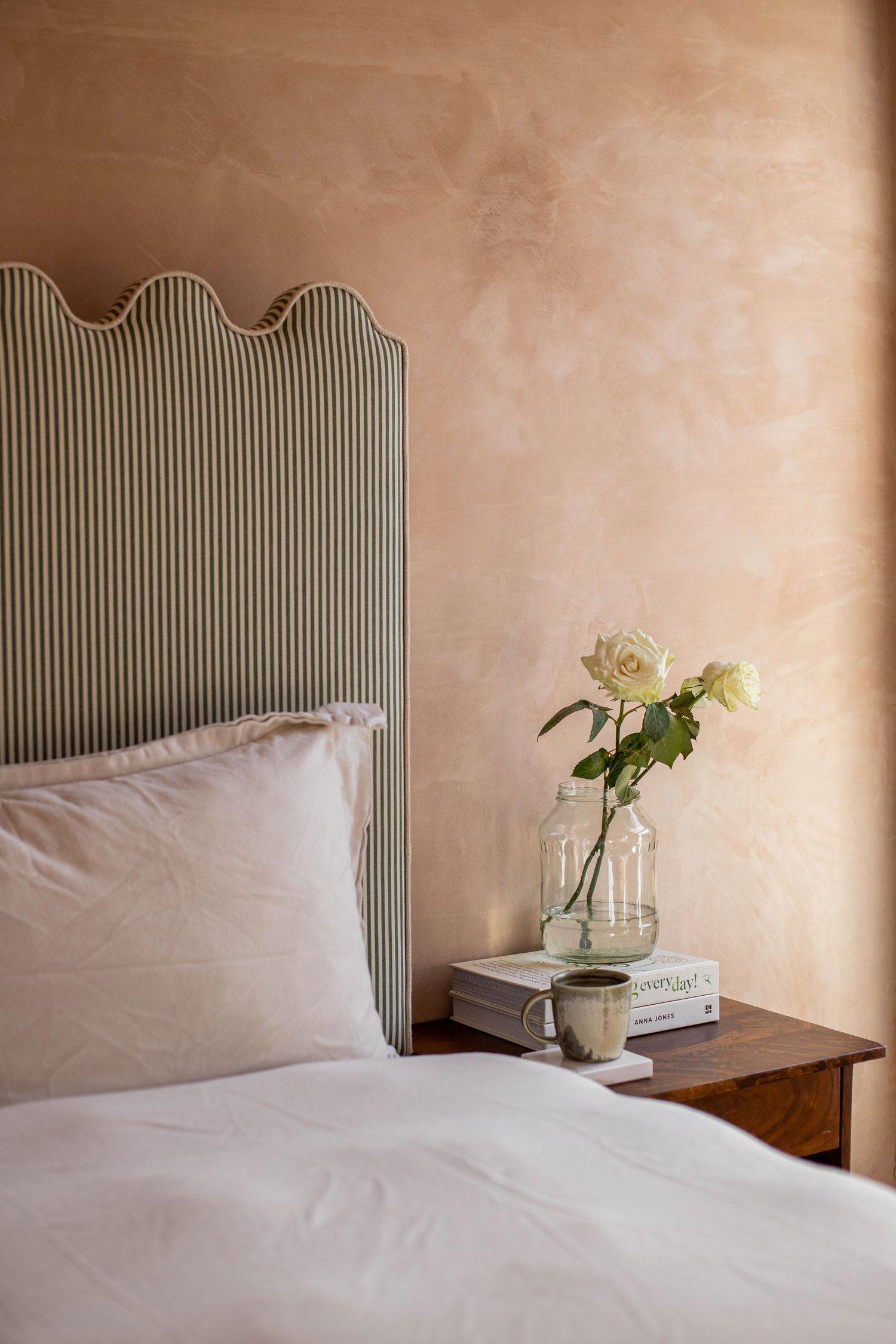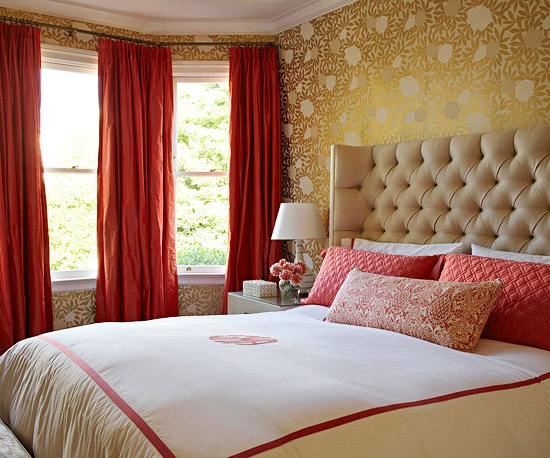

There’s a quiet kind of comfort in a room where lines curve rather of clash. A headboard that sweeps in a soft arc can read like a small landscape behind the bed, a gentle horizon that invites the eye to rest. It’s not just decorative flourish – those rounded silhouettes seem to change how a bedroom feels, smoothing the visual noise and suggesting a subtler, more protective edge to the space.
This article will explore why curved headboards frequently enough register as more relaxing than their angular counterparts. We’ll look at the ways soft shapes interact with perception and emotion, how ergonomics and materials play into the sensation of comfort, and how light and shadow behave differently across a rounded surface. Along the way you’ll find practical takeaways for choosing or styling a headboard that promotes calm, whether you’re redesigning a master suite or tweaking a small guest room.
No single element guarantees better sleep, but by understanding how shape helps shape experience, we can make more mindful choices about the furniture we live with – beginning, perhaps, with the curve that cradles our heads at night.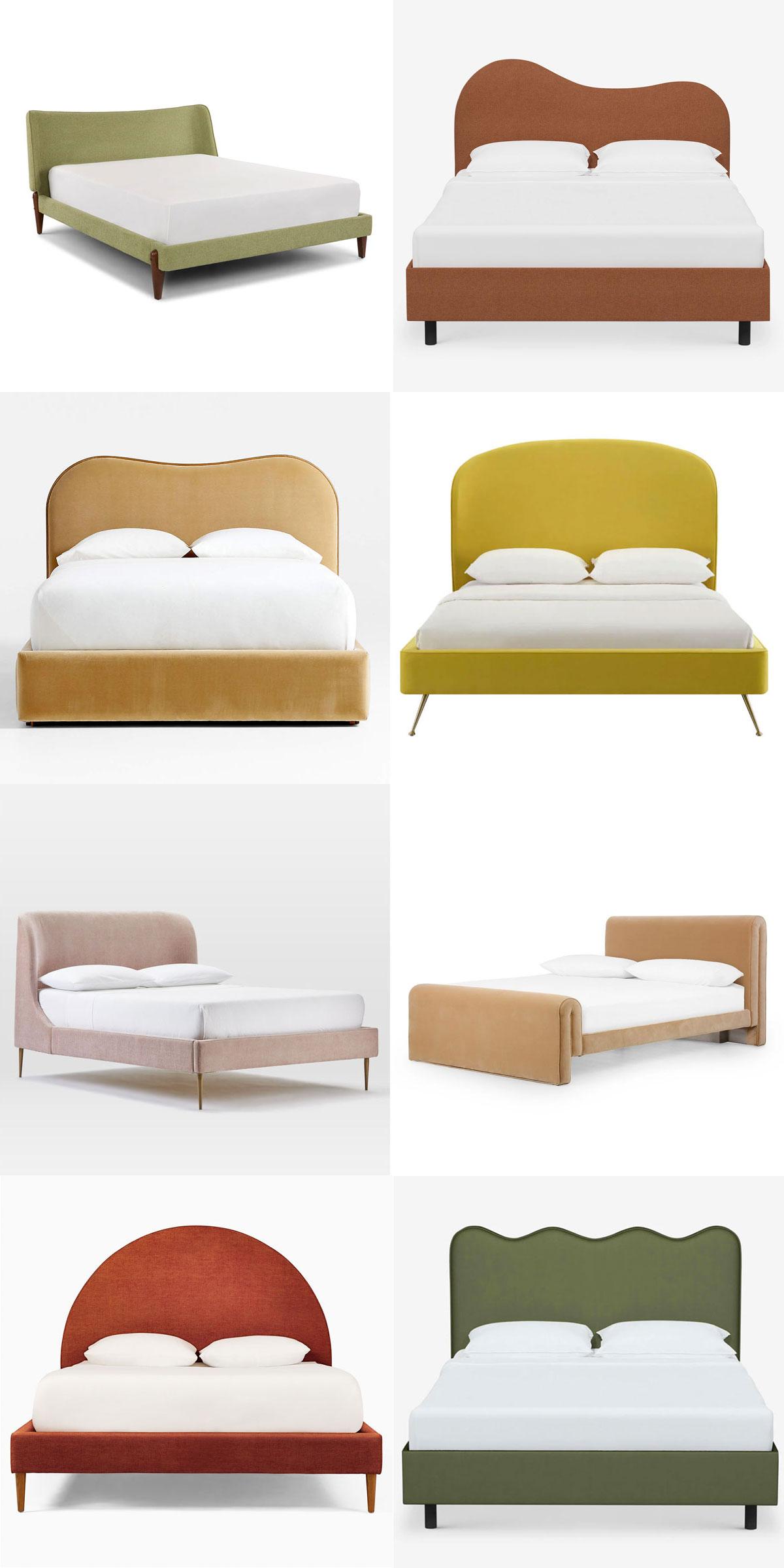
Why curved silhouettes calm the brain: visual perception, ergonomics and the physiology of relaxation
- Soft visual flow – encourages the gaze to rest rather than jump.
- Lower prediction error - smoother shapes are easier for the brain to model.
- Gestalt comfort – continuity and closure create a sense of completion and calm.
Beyond sight, curves work on the body: a gently rounded headboard supports natural posture, reduces pressure points at the shoulders and neck, and invites a lighter, more relaxed breathing pattern-all cues that feed into the parasympathetic nervous system. Bold tactile and ergonomic benefits make curved silhouettes feel like a small, built-in embrace that helps downregulate stress responses.
| Curve | immediate effect |
|---|---|
| Soft arch | Visual rest and gentle head support |
| Sweeping curve | Cradles shoulders, reduces micro-tension |
| Rounded corners | Safer, more approachable silhouette |
Choosing the right curve for your bedroom size and sleep habits: scale,height and material recommendations
Think of a curved headboard as an architectural whisper: its scale should harmonize with your room so the soft arc neither visually shrinks the space nor overpowers it.In small bedrooms, opt for a low-profile, shallow curve that stops at mid-wall height to keep sightlines open; in taller rooms, a taller, more pronounced sweep can anchor the bed and add a cozy focal point. Height matters: a headboard that rises 18-26 inches above the mattress works for most standard ceilings, while ceilings over 9 feet invite 36-inch or taller designs. Practical pointers:
- studio/Small rooms: slim, low curve (12-18 in)
- Standard bedrooms: medium curve (18-26 in)
- Large/master suites: bold sweep (30-48 in)
Your sleeping habits should guide material choices almost as much as aesthetics do: hot sleepers benefit from breathable linen or woven blends, side sleepers often prefer a softly padded upholstered arc for cushioned support when sitting up, and back sleepers may gravitate toward a firmer, solid-back design for upright reading. For a speedy reference, here’s a simple match-up to help you decide-materials are paired with the curve style and a short note on feel:
| Material | Curve Style | Feel |
|---|---|---|
| Linen/Upholstery | Gentle arc | Breathable, soft |
| Velvet | Pronounced sweep | Plush, cozy |
| Solid wood | Subtle curve | Structured, warm |
| Metal frame | Minimal curve | Sleek, airy |
Choose a curve that complements both your room proportions and how you like to relax in bed-functional comfort and visual calm should go hand in hand.
Fabrics, colors and lighting that amplify softness: practical styling tips to boost restful vibes
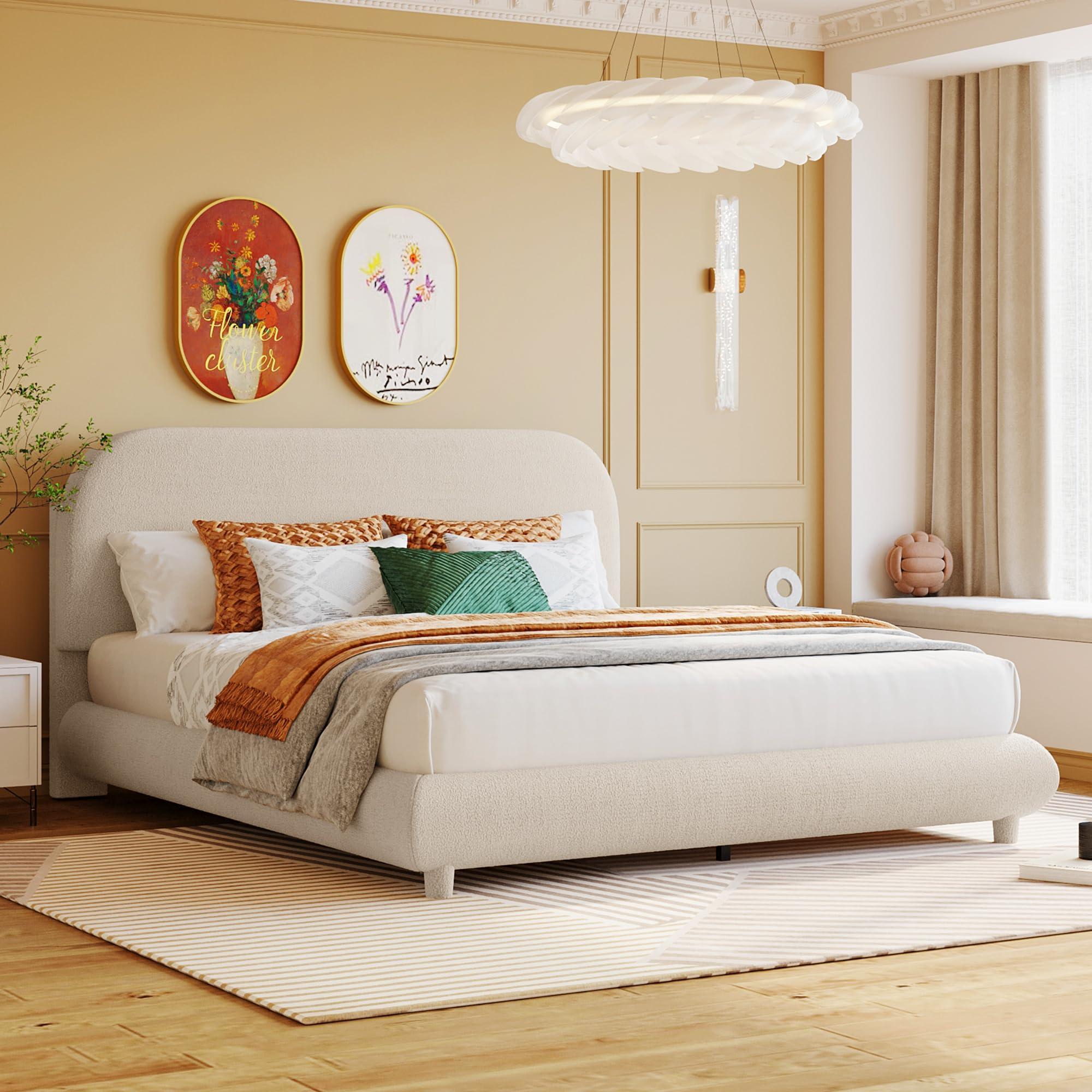
Choose textiles that invite touch: layer a bouclé throw, a washed linen duvet and a low-sheen velvet cushion to create depth without visual weight. Keep your palette restrained-think muted sage, warm beige, dusty rose and soft gray-so the room reads as a calm backdrop rather than a busy canvas. Small styling moves make a big difference:
- Mix textures rather than patterns to maintain a serene look.
- Opt for matte finishes on upholstery and ceramics to reduce glare.
- Scale down contrast by pairing a light bedframe with slightly darker bedding for a cocooned effect.
Light strategically to enhance that gentle, calming aura: layer ambient, task and accent light and prefer bulbs around 2700K for a warm, sleep-friendly glow. Use dimmers and fabric-shaded lamps near the bed for instant softness, and add a few reflective accents-brushed brass or frosted glass-to bounce light subtly.
| Element | Why it soothes |
|---|---|
| Warm bulbs (2700K) | Signals evening calm to the brain |
| Layered lamps | Prevents harsh overhead glare |
| Soft textiles | Add tactile comfort and sound dampening |
Placement and maintenance advice to preserve comfort and longevity: mounting, spacing and cleaning recommendations
Mount your curved headboard to invite calm,not chaos: aim for the centerline of the bed and leave a modest gap of 2-4 inches between the headboard and the wall to allow airflow and prevent condensation. If you’re attaching to drywall, use anchors rated for the headboard’s weight; for masonry, choose appropriate plugs and screws. Consider wall-mounting when you want a floating, streamlined silhouette, or secure to the bed frame for extra stability-either way, measure twice and mark once.
- Height guide: top of headboard 6-10 inches above mattress for a cozy feel.
- Spacing: keep 2-4 inches from the wall; 1-2 inches behind lamps to avoid heat buildup.
- Fixings: toggle anchors for hollow walls, masonry plugs for brick or concrete.
Preserve the soft curve and its relaxing effect with simple upkeep: vacuum fabric weekly with a soft brush attachment, blot spills immediately, and test cleaners on an inconspicuous patch before use. Tighten bolts and check brackets seasonally so the headboard never wobbles and loses its comforting posture.
- Cleaning: spot-clean stains promptly; steam lightly only on compatible fabrics.
- Sun care: avoid prolonged direct sunlight to prevent fading and stiffness.
- Longevity: re-tighten hardware quarterly and use felt pads where the headboard meets the wall to stop abrasion.
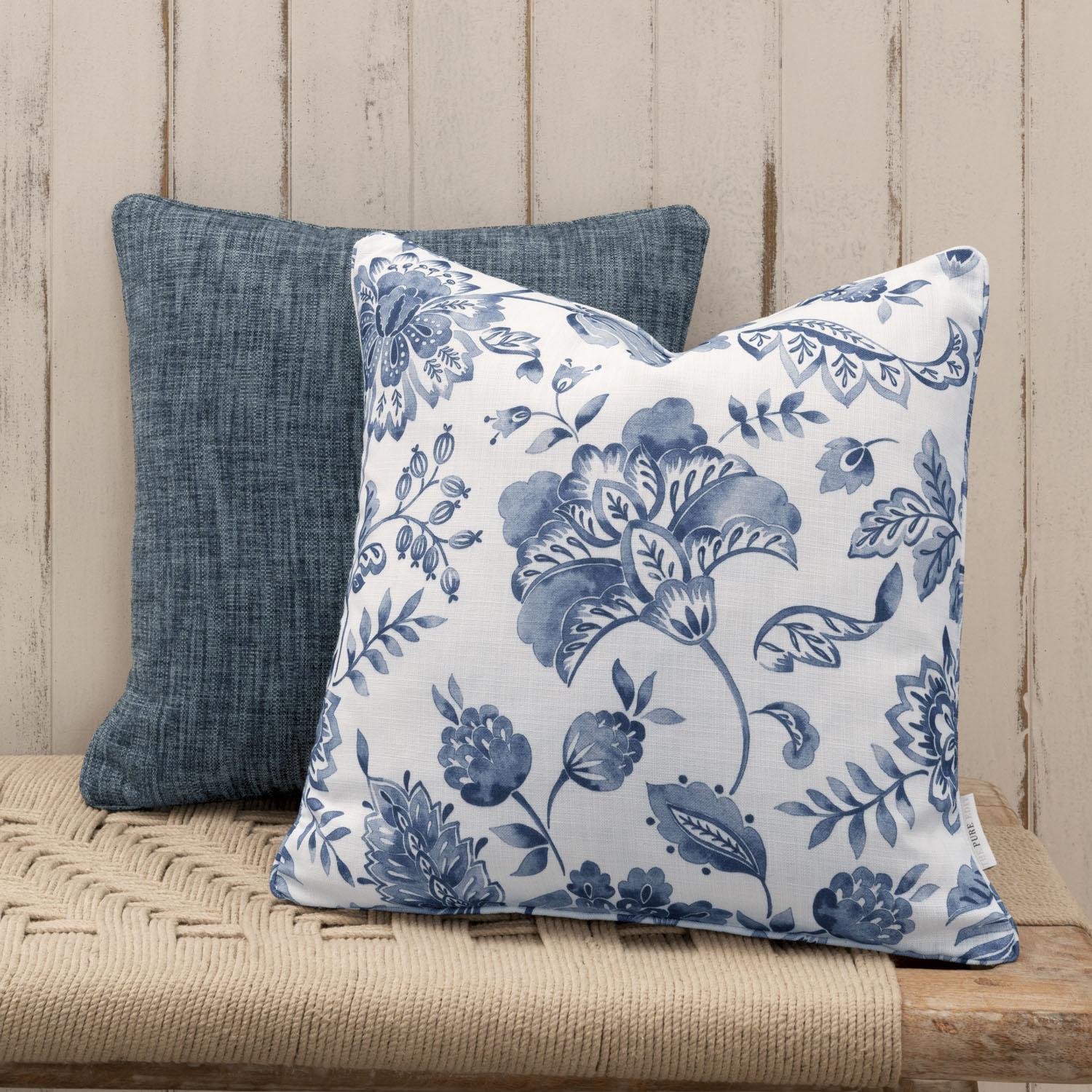
Small additions that enhance the effect: cushions, bolsters and bedside setups to create a tranquil retreat
soft accessories are the quiet companions that amplify the soothing geometry of a curved headboard. Cushions with rounded corners and a mix of plush textures echo the headboard’s sweep, creating a visual hug that encourages relaxation.Bolsters act like gentle armatures-use them to cradle your lower back or prop under knees for extra comfort; their cylindrical shape mirrors the headboard’s silhouette and reinforces a sense of containment. Choose a restrained palette and fabrics that invite touch-linen, brushed cotton or a velvet with a low sheen-to keep the focus on comfort rather than contrast. Small, deliberate choices in texture, support and scale turn a bed into a tranquil retreat without overwhelming the room.
Try these simple bedside and pillow strategies to complete the effect:
- Layering: one large back cushion, two sleeping pillows, one firm bolster for posture.
- Placement: tuck smaller cushions toward the center to emphasize the headboard’s curve.
- Bedside styling: low-watt lamp, a shallow tray for essentials, and a small plant or ceramic dish for visual calm.
- Sensory touches: a linen pocket for a sleep mask and a reed diffuser or candle for a subtle,calming scent.
Insights and Conclusions
A curved headboard is more than a design choice – it’s a quiet gesture toward calm. By softening hard angles, guiding the eye along a continuous line, and cradling the body with subtle ergonomics, those gentle arcs invite a slower rhythm to a room that frequently enough moves too fast.Whether its comfort comes from biology, aesthetics, or simply the way a curved silhouette feels like a soft exhale, the result is the same: a space that nudges you toward ease.
If you’re rethinking your bedroom, let the curve be a small experiment in atmosphere. Even a modest change can shift how you arrive at rest, turning sleep from a task back into a sanctuary.