Your home’s foundation isn’t something you think about every day. It’s usually hidden beneath the floors or behind the walls, quietly supporting everything above it. But when cracks appear, floors start to slope, or doors suddenly refuse to close properly, that dependable structure can become a major concern.
The next question is often the most stressful one: How much will it cost to fix?
Foundation repair costs vary considerably. A small crack that needs professional sealing may cost a few hundred dollars, while serious settling, structural movement, or extensive excavation can require thousands or even tens of thousands of dollars.
The good news is that foundation problems don’t automatically mean your home needs a complete foundation replacement. Understanding the warning signs, identifying the underlying cause, and getting the right professional assessment can help you make better decisions about your home and your budget.
Whether you’re maintaining an older property, planning a renovation, or responding to a newly discovered crack, here’s what you should know before committing to foundation repairs.
How Much Does Foundation Repair Cost?
For homeowners in the United States, a useful starting point is the current national pricing data. HomeAdvisor’s 2026 guide reports that foundation repairs commonly cost between $2,225 and $8,133, with an average of approximately $5,174. Actual prices depend on the repair method, the extent of the damage, and local labor and material costs.
These figures are planning benchmarks rather than guaranteed prices for an individual home. Minor repairs may cost considerably less, while complex structural work can exceed the typical range.
Typical foundation repair price ranges
| Repair type | Illustrative cost range |
| Crack sealing or injection | 250–800 |
| Slab jacking or lifting | 550–1,300 |
| Foundation waterproofing | 2,300–7,300 |
| Pier installation or underpinning | 1,000–3,000 per pier |
| Foundation reinforcement | 4,000–12,000 |
| Extensive foundation lifting | 20,000–23,000 |
These are approximate U.S. cost ranges compiled from published home repair cost guides. The methods and scope covered by each estimate vary, and complex projects may cost substantially more.
The important distinction is that foundation repair is not one standardized service. Sealing a nonstructural crack is very different from stabilizing a sinking section of a house.
A contractor should identify the cause of the problem before recommending a repair method. Otherwise, you risk paying to address a visible symptom while the underlying issue continues.
What Factors Affect Foundation Repair Costs?
Several factors determine the final price. Understanding them makes it easier to compare contractor estimates and recognize why two homes with seemingly similar damage may receive very different quotes.
1. The severity of the damage
Minor cracks may require localized sealing, while significant settlement can call for engineered supports or other structural stabilization.
The more extensive the damage, the more likely the project will involve additional labor, equipment, materials, and inspections.
2. The type of foundation
Different foundation designs require different repair approaches.
- Concrete slab foundations: Repairs may involve crack injection, lifting settled concrete, or installing supports beneath affected areas.
- Basement foundations: Work may include crack repair, exterior excavation, waterproofing, or reinforcement of bowing walls.
- Crawl-space foundations: Repairs may involve adjusting supports, replacing damaged beams, addressing moisture, or installing additional piers.
The accessibility of the foundation also matters. A repair beneath a tightly enclosed crawl space can require more labor than a similar repair along an exposed exterior wall.
3. Soil conditions and drainage
The ground beneath your home plays a significant role in foundation stability.
Expansive clay soils can swell when wet and shrink during dry periods. Poorly compacted soil may settle under a home’s weight, while water accumulating near the foundation can contribute to erosion, pressure, and moisture problems.
The solution may require more than repairing concrete. Depending on the cause, the project could also involve correcting drainage, redirecting downspouts, or addressing plumbing leaks.
4. Labor, materials, and site accessibility
Foundation repairs often involve specialized equipment and experienced contractors. Excavation, heavy materials, restricted access, and difficult working conditions can all increase labor costs.
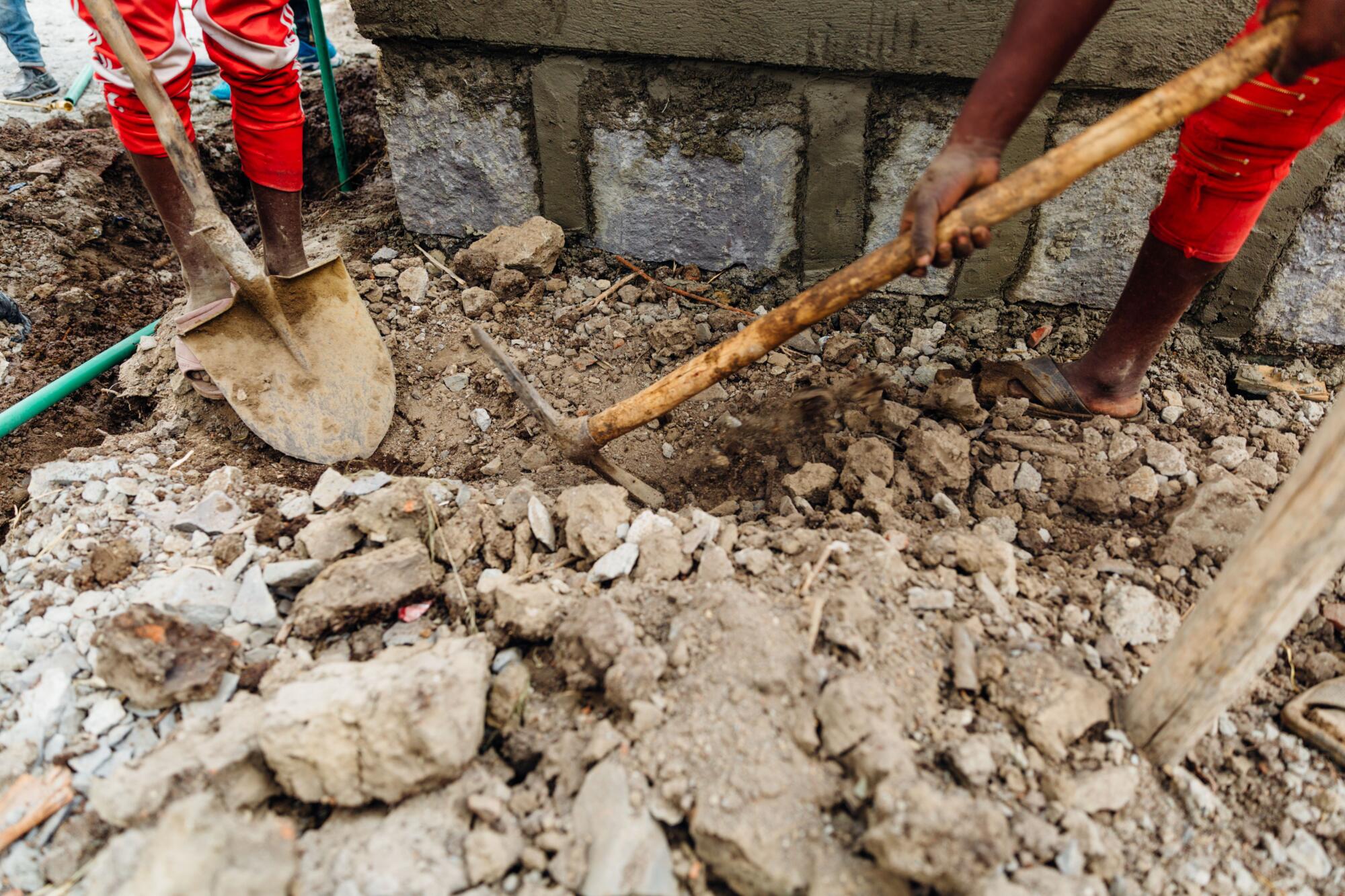
The photograph accompanying this article illustrates one part of that process: workers clearing rubble and excavating soil around a foundation. Depending on the project, site preparation and debris removal may be necessary before the actual repair can begin.
Homeowners should ask whether excavation, disposal, landscaping restoration, and cleanup are included in the quoted price.
5. Engineering assessments and permits
Some repairs require a structural engineer’s assessment, building permits, or inspections. These expenses should be considered separately if they are not included in the contractor’s proposal.
An independent structural engineer can be particularly useful when damage is extensive, several contractors recommend different solutions, or you need to understand whether a crack is cosmetic or structural.
Warning Signs That Your Foundation May Need Attention
Not every crack indicates a serious structural problem. Concrete naturally changes over time, and small cracks can develop as materials shrink or settle. However, certain symptoms deserve a closer look.
Watch for:
- Cracks in walls or ceilings: Pay attention to cracks that widen, recur after patching, or appear alongside other signs of movement.
- Doors and windows that stick: Changes in the frame alignment may indicate movement, although humidity and ordinary wear can also cause these problems.
- Uneven or sloping floors: Noticeable changes in floor level can warrant professional evaluation.
- Gaps around windows, doors, or trim: New or expanding gaps may be associated with structural movement.
- Water entering the basement or crawl space: Persistent moisture can damage materials and may indicate drainage or waterproofing problems.
- Visible foundation movement: Bulging basement walls, significant displacement, or rapidly developing cracks require prompt professional attention.
When should you call a professional?
Arrange an assessment if cracks are growing, several symptoms appear together, or you notice changes in the shape or alignment of your home.
Rapidly widening cracks, visibly bowing walls, sudden settlement, or structural movement accompanied by unusual sounds should be treated as urgent. Keep people away from potentially unsafe areas and seek qualified professional guidance.
Photographing cracks and recording their approximate width and location can help you document changes. Avoid assuming that a crack is harmless simply because it looks small.
How to Budget for Foundation Repairs
Foundation work is easier to manage when you approach it as a planned home maintenance project rather than an emergency purchase.
Start with a professional inspection
Before accepting an expensive repair proposal, find out what is actually causing the problem.
A qualified foundation specialist can assess the visible damage and recommend appropriate repairs. For complex or disputed structural issues, consider an independent structural engineer who can evaluate the building without selling you a particular repair system.
Ask whether additional testing is necessary and what each test will establish.
Get multiple written estimates
Whenever practical, obtain two or three itemized estimates from qualified contractors.
Compare more than the final price. Each proposal should explain:
- The identified problem and recommended solution.
- The work area and number of supports, piers, or reinforcement elements, where applicable.
- Materials and labor included in the price.
- Excavation, cleanup, and restoration responsibilities.
- Permits, inspections, and engineering fees.
- Warranty terms, exclusions, and payment milestones.
If one contractor recommends a substantially more expensive repair than another, ask each to explain the difference. The lowest bid isn’t necessarily the best value if it leaves the underlying problem unresolved.
Build a contingency into your budget
Excavation can reveal conditions that weren’t visible during the initial inspection, such as deteriorated materials, unexpected water intrusion, or additional areas requiring attention.
As a general budgeting approach, consider setting aside an additional 10% to 20% above the estimated project cost when your finances allow. This is a planning suggestion, not a universal industry requirement, and complicated projects may need a larger reserve.
For example, a $6,000 estimate would mean an additional $600 to $1,200 in contingency funds, bringing the working budget to 6,600–7,200.
Before work begins, ask the contractor to obtain your written approval for additional work rather than automatically proceeding with costly changes.
Check insurance and financing options
Standard homeowners insurance often excludes damage caused by gradual settling, wear, or inadequate maintenance, although coverage depends on the policy and the circumstances. Certain sudden events may be treated differently.
Review your policy and contact your insurer before assuming a repair will be covered. Ask about deductibles, exclusions, documentation, and whether an inspection is required.
If financing is necessary, compare the interest rate, fees, repayment period, and total borrowing cost. Avoid committing to financing before you understand the repair scope and have reviewed the contractor’s written proposal.
Can You Prevent Foundation Problems?
You cannot eliminate every risk, but regular maintenance can reduce preventable moisture problems and help you catch changes before they become more extensive.
Manage water around your home
Water management is one of the most practical places to start.
- Keep gutters clear and make sure downspouts discharge water away from the foundation.
- Check that the ground slopes away from the house rather than directing runoff toward it.
- Repair plumbing leaks promptly.
- Address standing water and recurring basement moisture.
- Maintain drainage systems according to their design and manufacturer’s recommendations.
Avoid making major grading changes without considering neighboring properties, drainage easements, and local requirements.
Monitor seasonal changes
In areas with expansive soils, prolonged dry weather followed by heavy rain can contribute to soil movement. Keep an eye on recurring cracks and changes in doors, windows, and floors.
Do not attempt to stabilize the soil by dramatically changing its moisture level without professional guidance. The appropriate approach depends on the soil, climate, foundation type, and local conditions.
Make foundation checks part of routine maintenance
You don’t need to inspect your foundation every week. A periodic check during normal home maintenance is a sensible habit.
Look for new cracks, changes in existing damage, water stains, and signs of movement. Keep dated photographs so you can compare the condition over time.
Early documentation won’t prevent every expensive repair, but it can help you recognize when a professional assessment is needed.
DIY Foundation Repairs vs. Hiring a Professional
Small cosmetic repairs can sometimes be handled by a capable homeowner, but only after the cause and significance of the crack are understood.
Filling a crack with sealant may improve its appearance or help control minor water seepage, but it will not correct a sinking foundation or stabilize a moving wall.
Structural repairs are different. Installing piers, lifting a house, reinforcing a basement wall, or excavating around load-bearing elements requires appropriate expertise, equipment, and safety precautions.
Before choosing a DIY approach, consider whether the work could conceal evidence of ongoing movement, worsen water intrusion, or interfere with a future warranty claim.
For suspected structural damage, start with a professional assessment. Cosmetic repairs should follow—not replace—the correction of any underlying structural problem.
How to Choose a Foundation Repair Contractor
Choosing the right contractor can be just as important as setting the right budget.
Look for professionals with relevant foundation repair experience, verifiable references, appropriate licensing where required, and insurance coverage suitable for the work.
Ask these questions before signing a contract:
- What evidence supports your diagnosis?
- Why is this repair method appropriate for my home?
- Does the price include excavation, drainage improvements, and restoration?
- Will I need an engineer, permits, or inspections?
- What does the warranty cover, and what could void it?
- How will you handle unexpected conditions or additional costs?
- What payment schedule and completion timeline should I expect?
Be cautious of contractors who pressure you to sign immediately, guarantee that every crack is harmless, or recommend extensive structural work without explaining their findings.
A trustworthy professional should be able to describe the problem in plain language and provide a written scope of work.
Conclusion
Foundation repair costs can range from a few hundred dollars for limited crack repairs to tens of thousands for extensive structural work. The final price depends on the cause of the damage, your foundation type, soil conditions, site accessibility, and the repair method required.
The best starting point is a clear diagnosis, followed by itemized estimates and a realistic budget that accounts for potential additional work.
Regular drainage maintenance, documented inspections, and prompt attention to changing symptoms can help homeowners manage foundation problems more confidently. Most importantly, don’t confuse a quick cosmetic fix with a lasting structural solution.
When you understand what your home needs and why, you are in a much stronger position to protect its stability, manage repair expenses, and make informed decisions about its long-term care.
KEY TAKEAWAYS
- Foundation repair costs vary widely, with many U.S. projects falling within a few thousand dollars.
- The severity of the damage and the repair method are major cost drivers.
- Soil movement, poor drainage, and plumbing leaks can contribute to foundation problems.
- Growing cracks, uneven floors, sticking doors, and bowing walls deserve professional evaluation.
- Obtain itemized written estimates and compare the proposed solutions, not just the prices.
- Budget for engineering assessments, permits, excavation, and potential additional work.
- Maintain gutters and drainage systems to help manage water around your foundation.
- Cosmetic crack repairs cannot substitute for correcting an underlying structural problem.
FREQUENTLY ASKED QUESTIONS
1. How much does foundation repair cost on average?
Current U.S. cost guides report typical foundation repair costs of approximately 2,225–8,133, with an average around $5,174. Minor repairs may cost less, while extensive structural stabilization can exceed $10,000 or substantially more.
2. What is the cheapest way to repair a foundation?
If a crack is confirmed to be nonstructural, localized sealing may be one of the least expensive options. The appropriate repair depends on the cause, however. Sealing a crack will not solve foundation settlement or other structural movement.
3. Are foundation cracks always serious?
No. Some small cracks result from normal concrete shrinkage or minor movement. Cracks that widen, recur, accompany uneven floors, or appear with other signs of structural movement should be evaluated by a qualified professional.
4. Does homeowners insurance cover foundation repair?
Coverage depends on your policy and the cause of the damage. Gradual settling and maintenance-related problems are commonly excluded, while certain covered events may receive different treatment. Review your policy and speak with your insurer.
5. Is foundation repair worth the investment?
When a repair addresses a genuine structural or water-related problem, it can help protect the building and prevent further deterioration. The value depends on the diagnosis, repair quality, cost, and condition of the property. A professional assessment helps determine the appropriate investment.
6. How long does foundation repair take?
Minor crack repairs may be completed in a day or less, while pier installation, excavation, waterproofing, or extensive structural work can take several days or longer. Weather, site access, permits, and unexpected conditions can affect the schedule.
7. Can I sell my house if it has foundation problems?
In many cases, yes, but the condition may affect buyer interest, negotiations, financing, and the property’s market value. Disclosure obligations depend on local law. Keep inspection reports, repair records, warranties, and permits, and consult a qualified real estate professional about your circumstances.
8. How can I prevent foundation damage?
Maintain gutters and downspouts, direct runoff away from the house, repair plumbing leaks, monitor cracks, and address recurring moisture problems. Because soil and climate conditions vary, drainage and soil-management decisions should be appropriate for your property.
Visit: NextBldg.com