A kitchen remodel can completely transform a home—but you don’t always need a demolition crew, new cabinets, or a massive construction budget to get the same visual impact.
Sometimes, the difference between a kitchen that feels dated and one that feels fresh comes down to a handful of carefully chosen details.
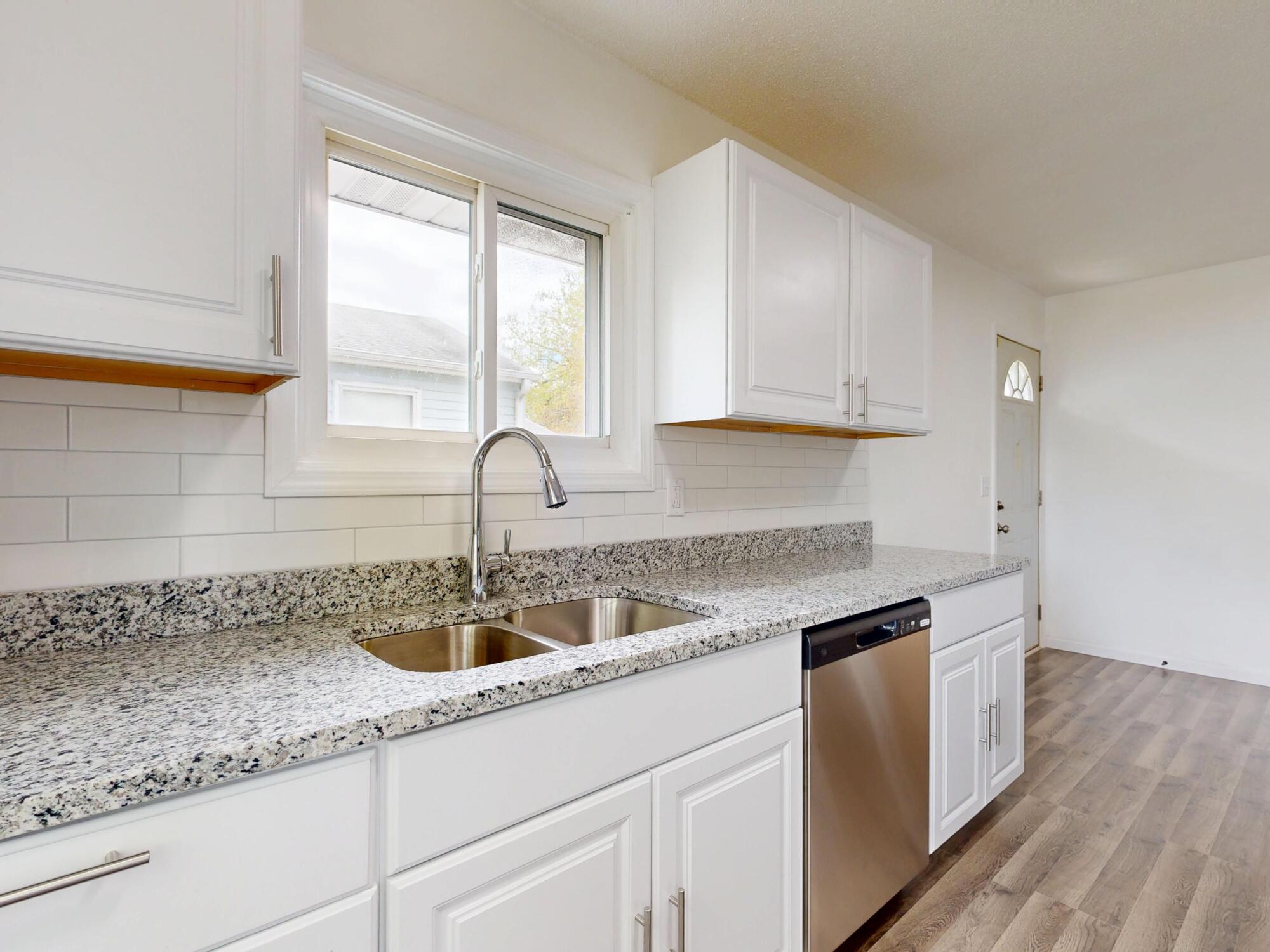
Look at the kitchen pictured here. The overall design is relatively simple: white cabinetry, a light countertop, subway tile, stainless steel appliances, and wood-look flooring. Yet the combination feels clean, bright, and updated. That’s the real lesson: you don’t necessarily need more kitchen—you need better visual coordination.
If your kitchen layout still works and the cabinets are in decent condition, an affordable kitchen makeover can focus on the surfaces and details you interact with every day.
Here are some of the highest-impact upgrades to consider.
- Paint the Kitchen Cabinets
If there’s one budget-friendly project capable of changing the personality of an entire kitchen, it’s painting the cabinets.
Cabinetry takes up a huge amount of visual space, so changing its color can make the room feel almost completely different.
White remains a popular choice because it reflects light and creates a clean, timeless appearance. But you don’t have to go white. Soft gray, warm beige, muted green, navy, and other carefully selected colors can create a more distinctive look.
The kitchen in the featured image demonstrates why light cabinetry works so well. The white cabinets complement the white subway tile while allowing the speckled countertop and flooring to add visual warmth.
Before painting, check the condition
Painting is most worthwhile when your existing cabinets are structurally sound.
Look for:
- Solid cabinet boxes
- Doors that aren’t badly warped
- Hinges that can be adjusted or replaced
- Drawers that still function properly
- Surfaces that can be cleaned, prepared, and painted
For the best finish, don’t rush the preparation. Remove the doors and hardware, clean away grease, lightly sand where appropriate, use a suitable primer, and apply thin, even coats of cabinet paint.
The preparation often matters more than the paint color itself.
- Replace Cabinet Hardware
New cabinet handles and knobs are one of the easiest ways to make older cabinetry feel current.
Think of hardware as jewelry for your kitchen. It’s a small detail, but because you touch and see it constantly, it can influence the entire room.
Replacing dated knobs with longer pulls can create a more contemporary appearance. Brushed nickel, chrome, brass, bronze, and matte black can each create a different mood.
For a kitchen similar to the featured image, streamlined metallic hardware works especially well because it coordinates naturally with the faucet and stainless-steel dishwasher.
A simple hardware trick
Before ordering dozens of handles, buy one or two samples.
Hold them against your cabinet doors in both daylight and artificial light. Pay attention to:
- Finish
- Size
- Shape
- Comfort
- How well they coordinate with the faucet and appliances
It is a small investment that can prevent an expensive mistake.
- Upgrade the Kitchen Lighting
Lighting can make a kitchen look better without changing almost anything else.
It also improves how the kitchen functions.
Instead of relying on one ceiling fixture, think about lighting in layers:
- Ambient lighting for general illumination
- Task lighting over countertops and work areas
- Accent lighting for visual interest
- Decorative lighting to establish personality
Under-cabinet lighting is particularly effective because it puts light directly where you prepare food. ENERGY STAR notes that under-cabinet LED fixtures can provide direct illumination of kitchen work surfaces while using significantly less electricity than traditional lighting technologies.
You don’t necessarily have to undertake a complicated electrical project, either. Depending on the kitchen, plug-in or rechargeable LED systems can provide a relatively simple way to test the effect before committing to permanent installation.
The National Kitchen & Bath Association also treats lighting as an important part of kitchen planning, including recessed, decorative, over-cabinet, and under-cabinet lighting.
Don’t forget the natural light
The large window above the sink in the featured kitchen is another design asset.
Keep windows as unobstructed as possible, particularly in smaller kitchens. Natural light can make white cabinetry, light countertops, and reflective surfaces feel brighter and more spacious.
- Give the Countertops a Refresh
Countertops are another major visual element, which makes them a good place to spend some of your renovation budget.
But replacing the entire countertop isn’t always necessary.
If the existing surface is structurally sound, start by asking whether it simply needs a thorough cleaning, resealing, polishing, or minor repair.
Natural stone countertops may require periodic sealing depending on the material and finish. Laminate counters in good condition can sometimes be updated through replacement rather than a full cabinet renovation.
And if replacement is necessary, you don’t necessarily need the most expensive material available.
Spend strategically
If you have a limited budget, consider where the countertop will have the greatest visual impact.
For example, you might choose:
- A more affordable countertop material throughout
- A higher-end surface only on a small island
- A remnant piece for a smaller countertop area
- A surface that complements rather than competes with existing cabinets
The featured kitchen’s speckled granite is a good example of a countertop doing double duty: it adds pattern and visual interest while working comfortably with the white cabinets and backsplash.
- Refresh the Backsplash
If your backsplash is outdated, you don’t automatically need to remove everything.
Sometimes a deep cleaning and fresh grout can make a surprising difference.
If replacement is appropriate, simple subway tile is still a versatile choice. Other affordable options include ceramic tile, porcelain tile, peel-and-stick products designed for appropriate kitchen applications, and other lightweight decorative treatments.
The goal isn’t necessarily to make the backsplash the star of the kitchen.
Instead, think about how it works with the cabinets and countertops.
A backsplash that coordinates with both can make the entire kitchen feel more intentional.
- Coordinate the Faucet and Sink
A faucet is another relatively small item that can have an outsized visual effect.
The chrome pull-down faucet in the featured kitchen provides a clean connection between the stainless-steel sink, dishwasher, and cabinet hardware.
When choosing a replacement faucet, consider more than appearance.
Look at:
- Spout height and reach
- Sink compatibility
- Handle placement
- Spray functionality
- Finish durability
- Ease of cleaning
If the sink itself is in good condition, keeping it and replacing only the faucet can save money while still producing a noticeable update.
And if you’re already making changes around the sink, don’t overlook ventilation. Cooking creates moisture, odors, and airborne particles. The EPA recommends using a range hood while cooking and, when possible, venting it outdoors.
- Update the Small Details
Once the major visual elements are addressed, look around the kitchen for the details that make the room feel dated.
These might include:
- Old outlet covers
- Yellowed switch plates
- Worn drawer organizers
- Dated window treatments
- Scratched toe kicks
- Cluttered countertops
- Mismatched small appliances
- Aging light fixtures
None of these changes is likely to create a dramatic transformation by itself.
Together, however, they can make the kitchen feel much more finished.
This is where a budget makeover starts to look like a complete remodel.
- Declutter Before You Decorate
Here’s one of the cheapest kitchen upgrades of all: remove things you don’t need.
A beautiful kitchen can still look dated if the countertops are covered with appliances, mail, food containers, and miscellaneous household items.
Before buying decorative accessories, clear the surfaces.
Keep frequently used items accessible, but give everything else a designated storage location.
A cleaner countertop allows the materials you’ve already invested in—your cabinets, backsplash, faucet, and countertop—to become part of the design.
How to Make Affordable Upgrades Look Expensive
The secret isn’t necessarily choosing the most expensive materials.
It’s choosing fewer materials and coordinating them well.
For example, you could create a polished look with:
White cabinets + simple backsplash + stone-look countertop + stainless steel + coordinated hardware
Or:
Warm painted cabinets + brass hardware + neutral countertop + warm lighting
The important thing is consistency.
Try not to introduce five different metal finishes, several competing countertop patterns, and multiple unrelated colors into a small space.
A restrained palette usually looks more intentional.
A Smart Order for a Budget Kitchen Makeover
If you’re tackling several projects, the order matters.
Start with changes that affect the largest visual surfaces.
A practical sequence
- Declutter and deep-clean
- Repair anything that is damaged
- Paint the walls or cabinets
- Update cabinet hardware
- Improve lighting
- Refresh or replace the countertop if needed
- Update the faucet and accessories
- Finish with décor
This approach prevents you from spending money on accessories before you’ve addressed the elements that actually make the kitchen feel dated.
It also lets you stop after each stage and decide whether another upgrade is really necessary.
When a Full Remodel Makes More Sense
Budget upgrades aren’t the answer to every kitchen problem.
If your cabinets are falling apart, the layout makes cooking difficult, plumbing needs to move, appliances don’t fit properly, or the kitchen lacks adequate storage, a larger renovation may be justified.
The National Kitchen & Bath Association’s current planning guidance covers everything from cabinetry and storage to lighting, electrical planning, ventilation, and code considerations—reminders that a successful kitchen isn’t just about appearance.
But if your kitchen is fundamentally functional, cosmetic improvements can deliver much of the visual benefit without the cost and disruption of a complete gut renovation.
Conclusion
A kitchen doesn’t have to be completely rebuilt to feel new.
Fresh cabinet paint, updated hardware, better lighting, a clean backsplash, a refreshed countertop, and a coordinated faucet can change the entire character of the room.
The featured kitchen is a good example of how these elements work together. White cabinetry keeps the space bright, the granite countertop adds texture, subway tile provides a clean backdrop, and stainless-steel details create a cohesive finish.
The best affordable kitchen upgrades aren’t necessarily the ones that cost the most. They’re the ones that make the biggest difference to how the room looks and functions.
Start with one change. Build from there. You may be surprised by how close you can get to a full remodel without actually remodeling the entire kitchen.
KEY TAKEAWAYS
- Painting existing cabinets can dramatically change a kitchen for far less than replacing them.
- New cabinet hardware is an inexpensive way to create a more modern look.
- Layered lighting can improve both kitchen appearance and functionality.
- Under-cabinet LED lighting is especially useful for countertop work areas.
- Don’t replace a countertop automatically—determine whether cleaning, sealing, repairing, or refinishing can solve the problem.
- Coordinating cabinet, countertop, faucet, hardware, and backsplash finishes creates a more expensive-looking result.
- Decluttering costs nothing and can make every other improvement more noticeable.
- If the kitchen has serious layout, structural, plumbing, or storage problems, a larger renovation may be the better long-term solution.
FAQ SECTION
What is the cheapest way to update a kitchen?
Painting cabinets, replacing cabinet hardware, changing light fixtures, decluttering countertops, and updating small accessories are among the most affordable ways to refresh a kitchen without major construction.
Is it worth painting old kitchen cabinets?
Yes, provided the cabinets are structurally sound. Proper cleaning, preparation, primer, and quality cabinet paint can give existing cabinetry a dramatically different appearance.
What kitchen upgrade makes the biggest difference?
Cabinet color is often one of the most noticeable changes because cabinets occupy a large amount of visual space. Lighting and hardware can then reinforce the new look.
How can I make my kitchen look more expensive?
Use a restrained color palette, coordinate metal finishes, improve lighting, reduce countertop clutter, and focus your budget on a few highly visible materials rather than adding too many decorative elements.
Are under-cabinet lights worth it?
For many kitchens, yes. They provide focused illumination directly onto work surfaces and can also make the kitchen feel warmer and more finished. LED options are particularly practical.
Should I replace my kitchen countertops during a budget remodel?
Not necessarily. If the countertop is still functional and attractive after cleaning or maintenance, you may be able to spend your budget elsewhere. Replace it when its condition or appearance is significantly holding back the kitchen.
Can I remodel a kitchen without replacing the cabinets?
Absolutely. Painting, refacing, replacing doors, changing hardware, improving lighting, and adding interior organization can all update existing cabinetry.
When should I consider a full kitchen remodel?
Consider a larger remodel when the kitchen has serious functional problems involving layout, storage, plumbing, electrical systems, damaged cabinetry, or appliance placement—not simply because the finishes look dated.